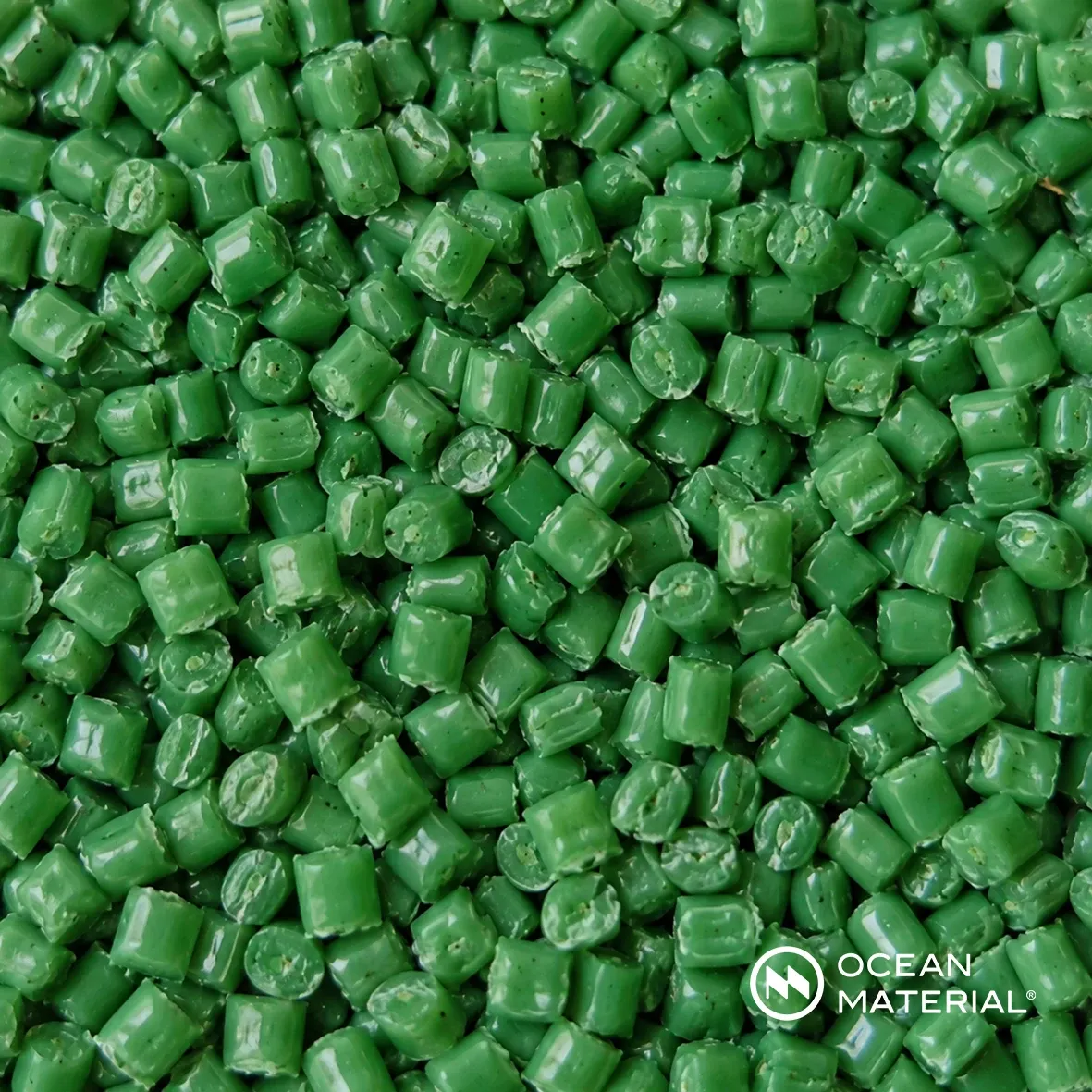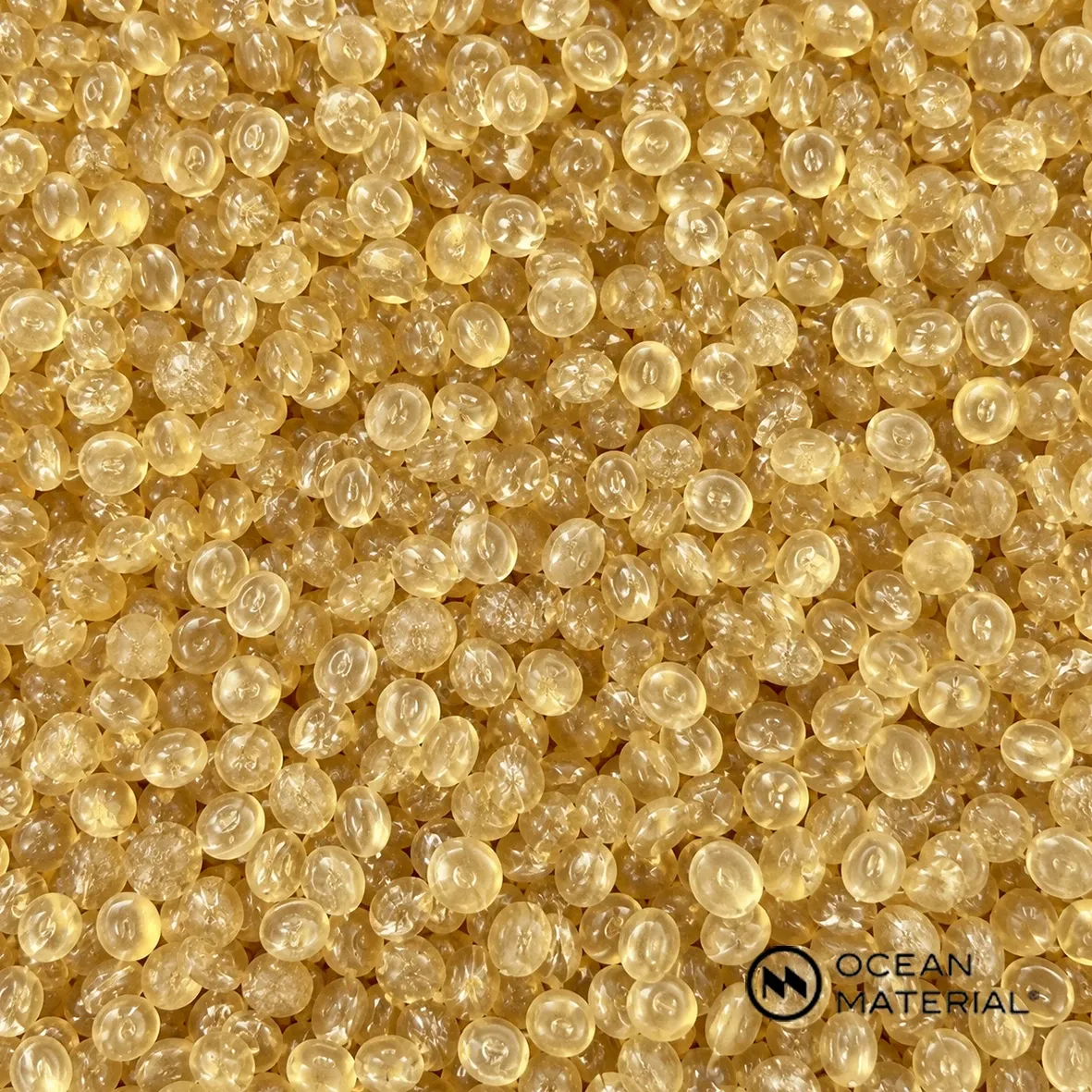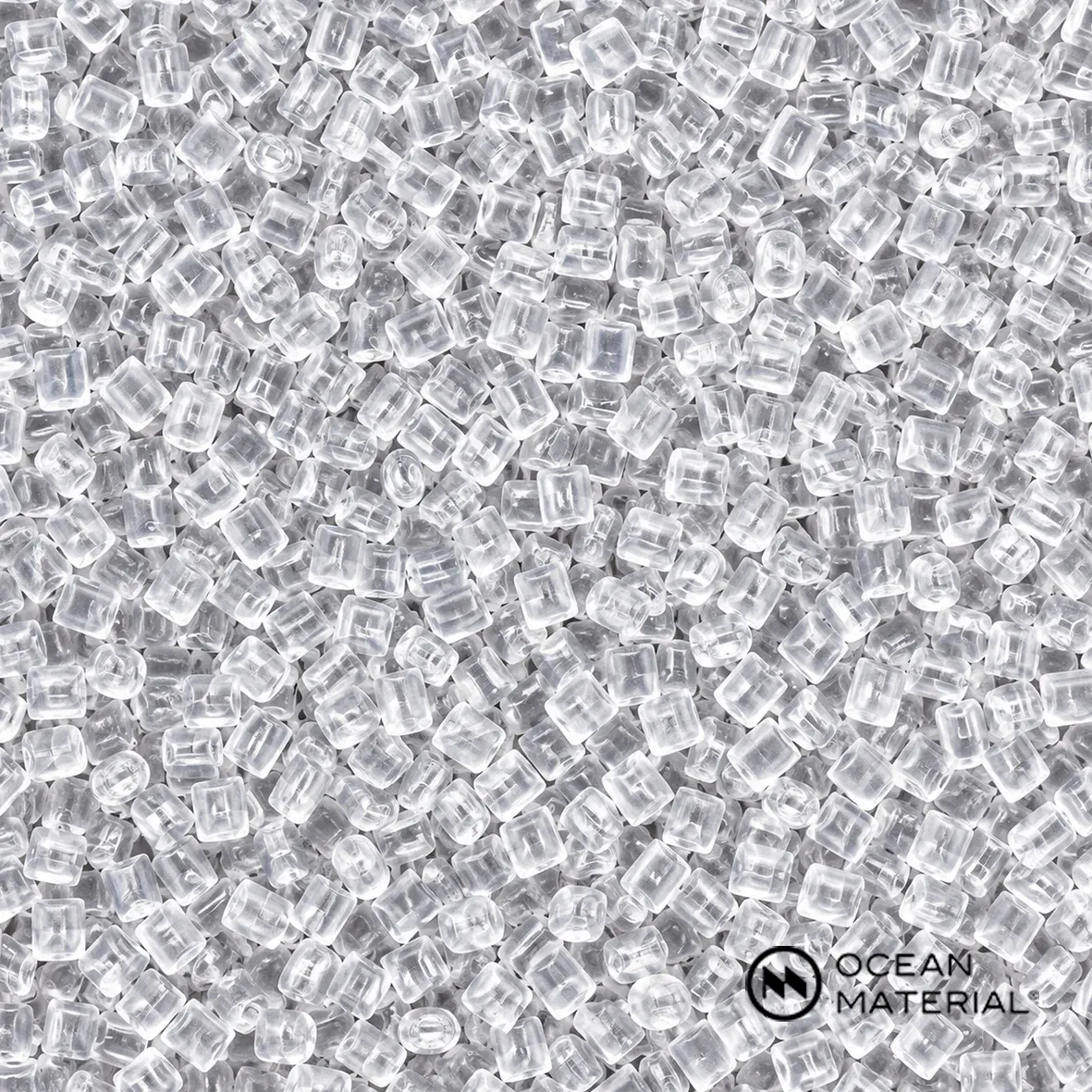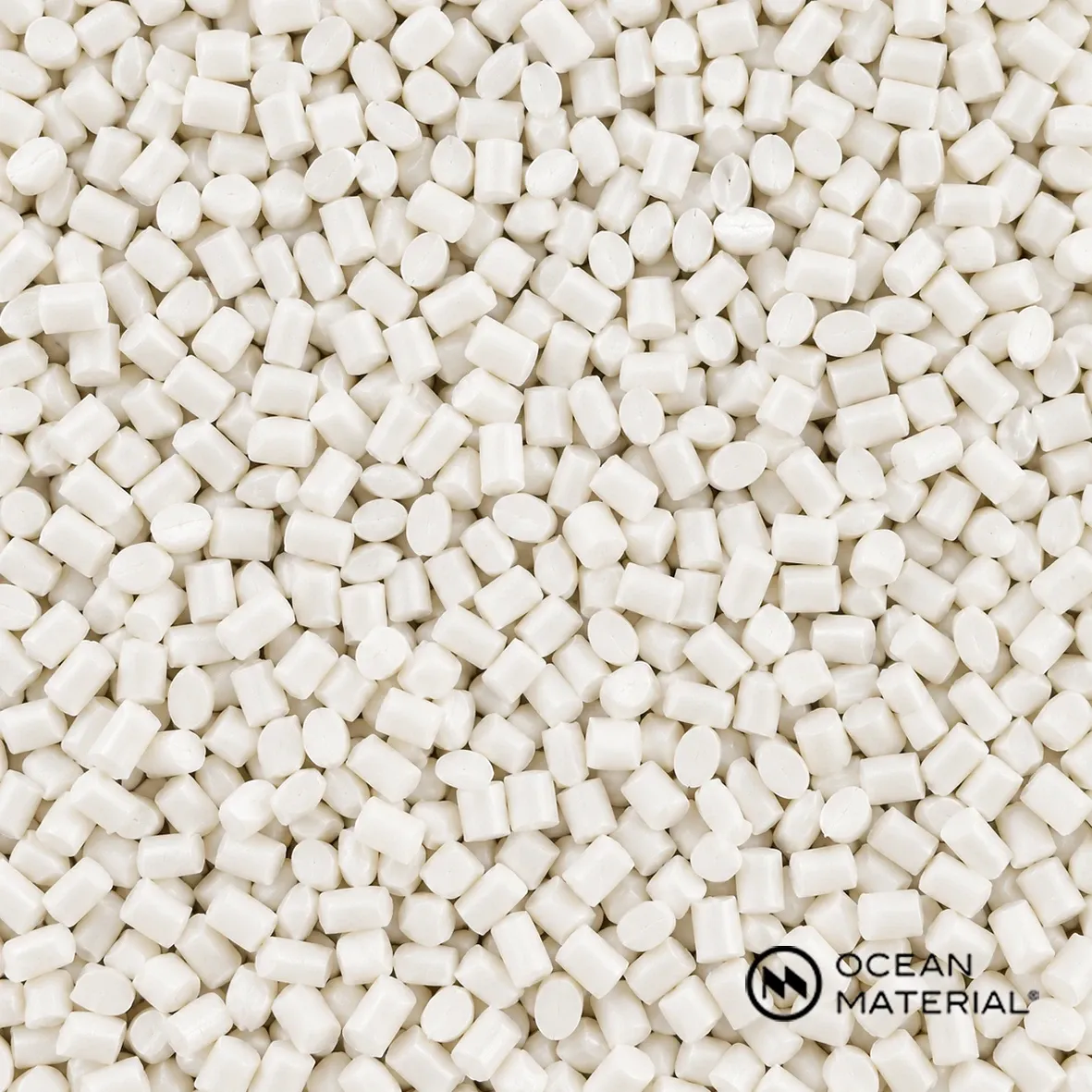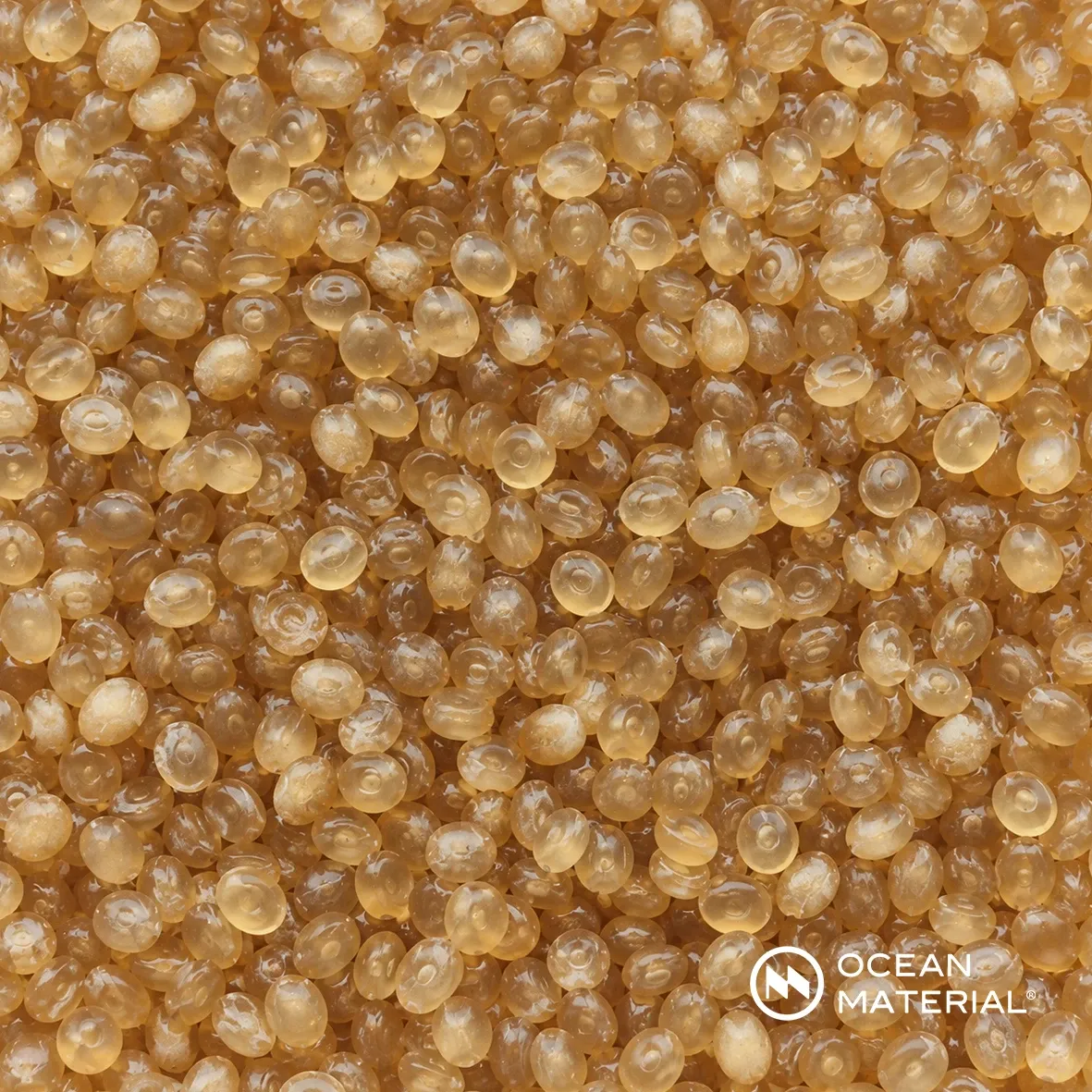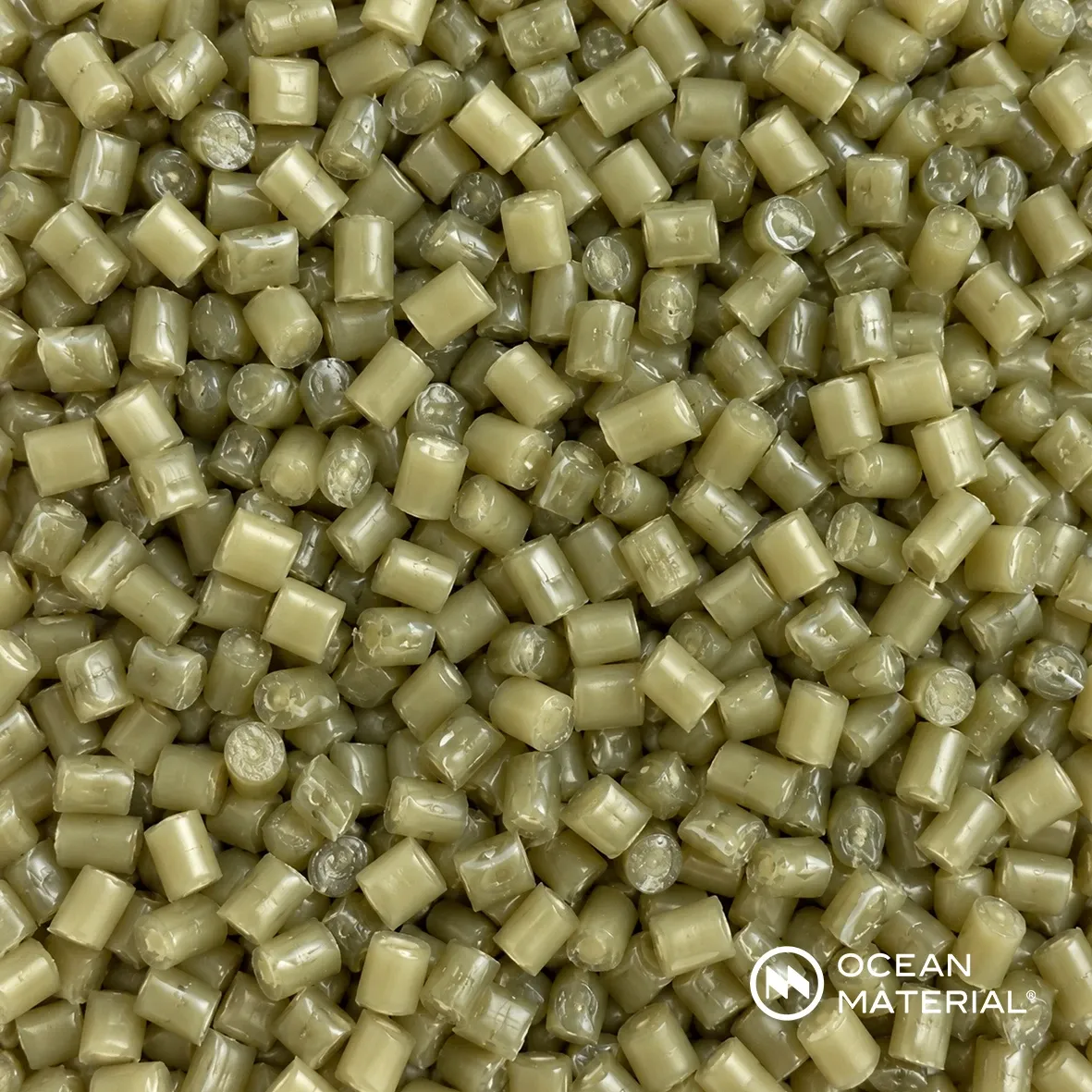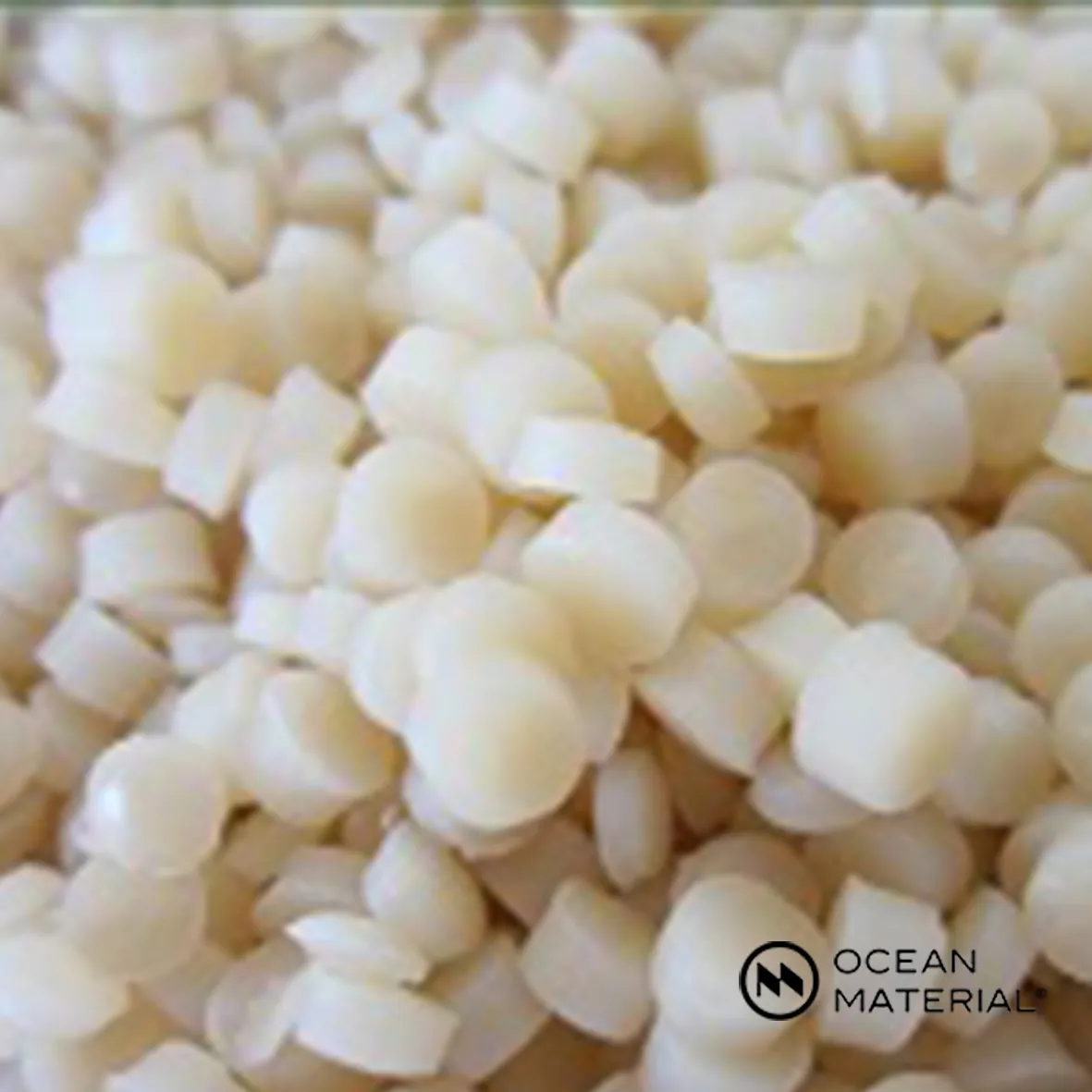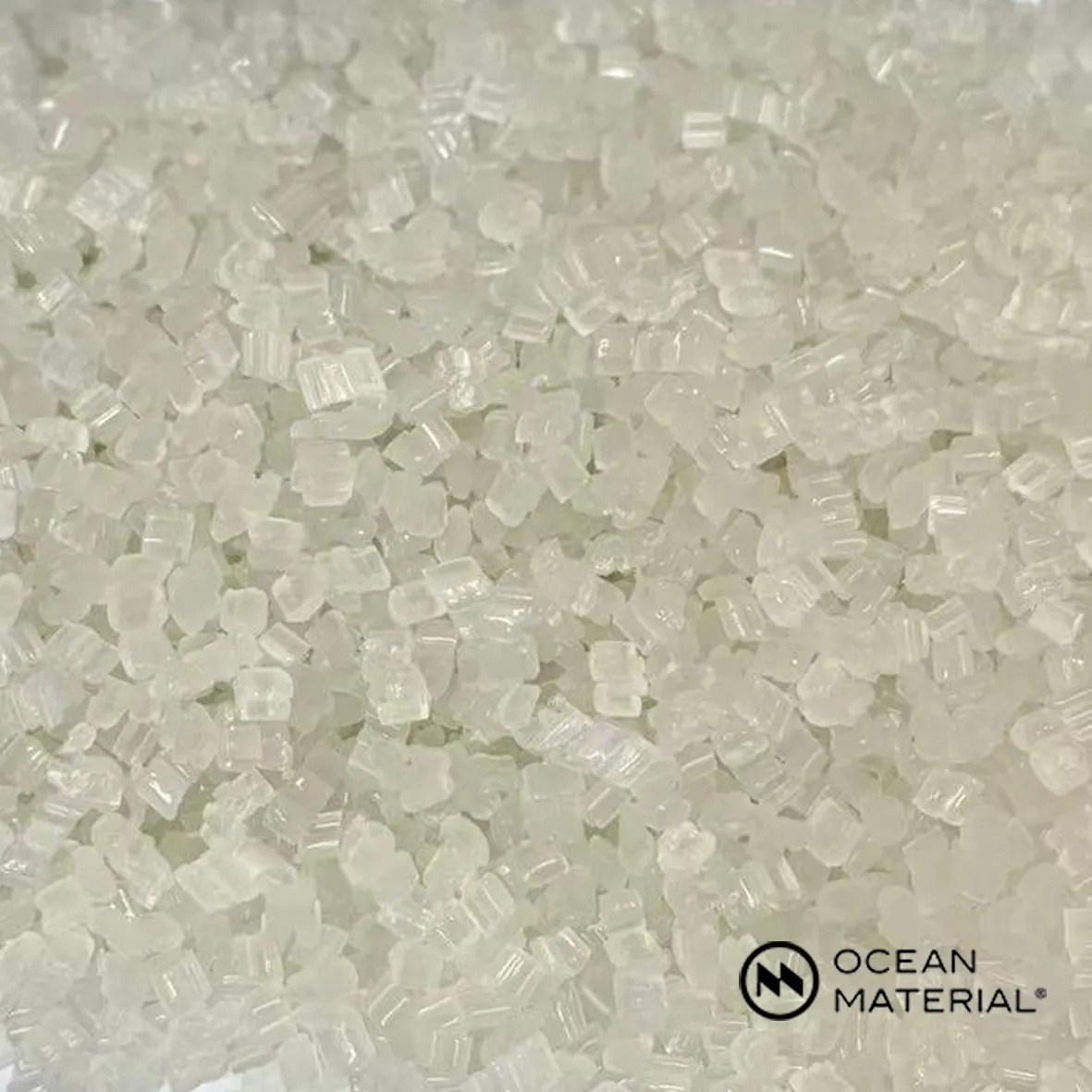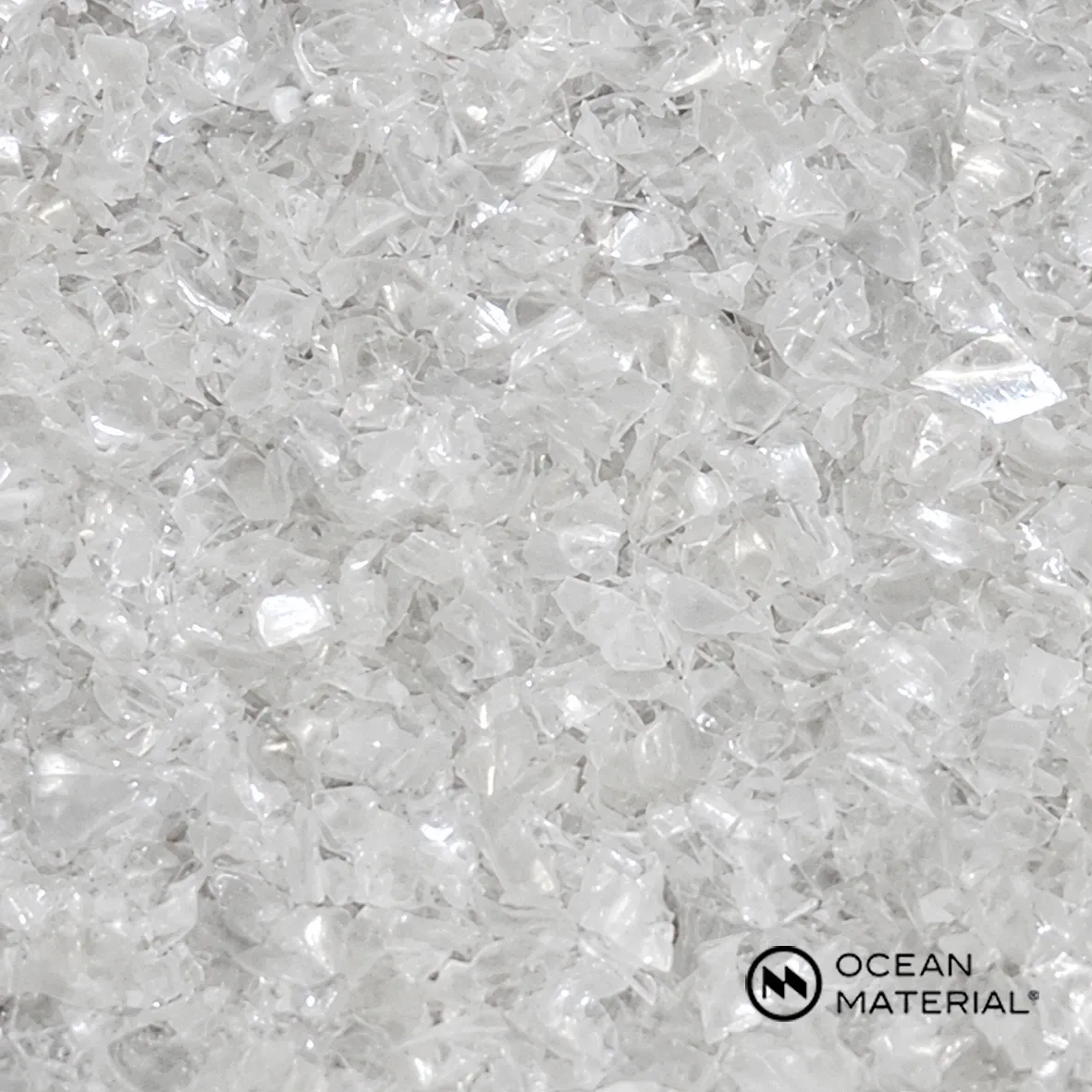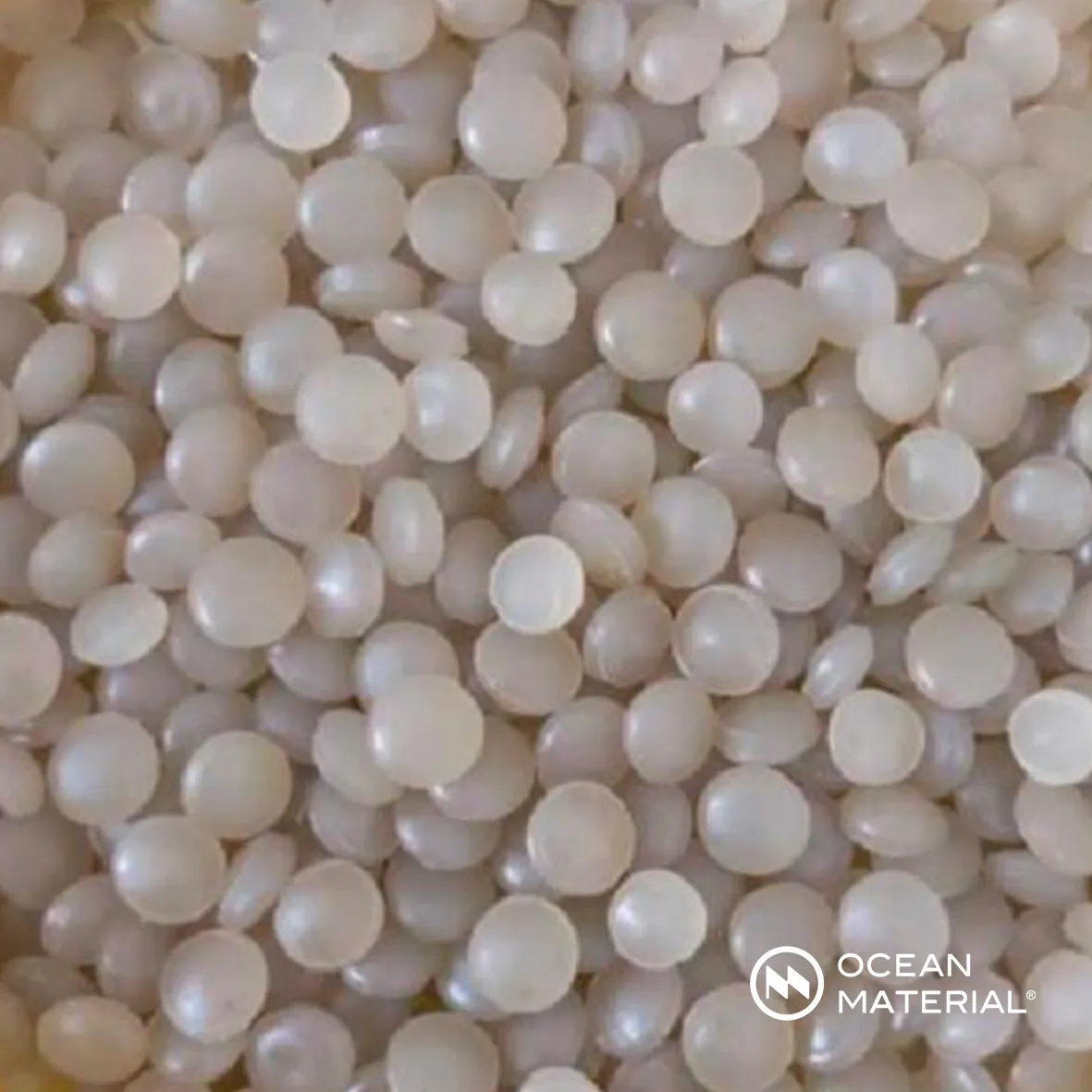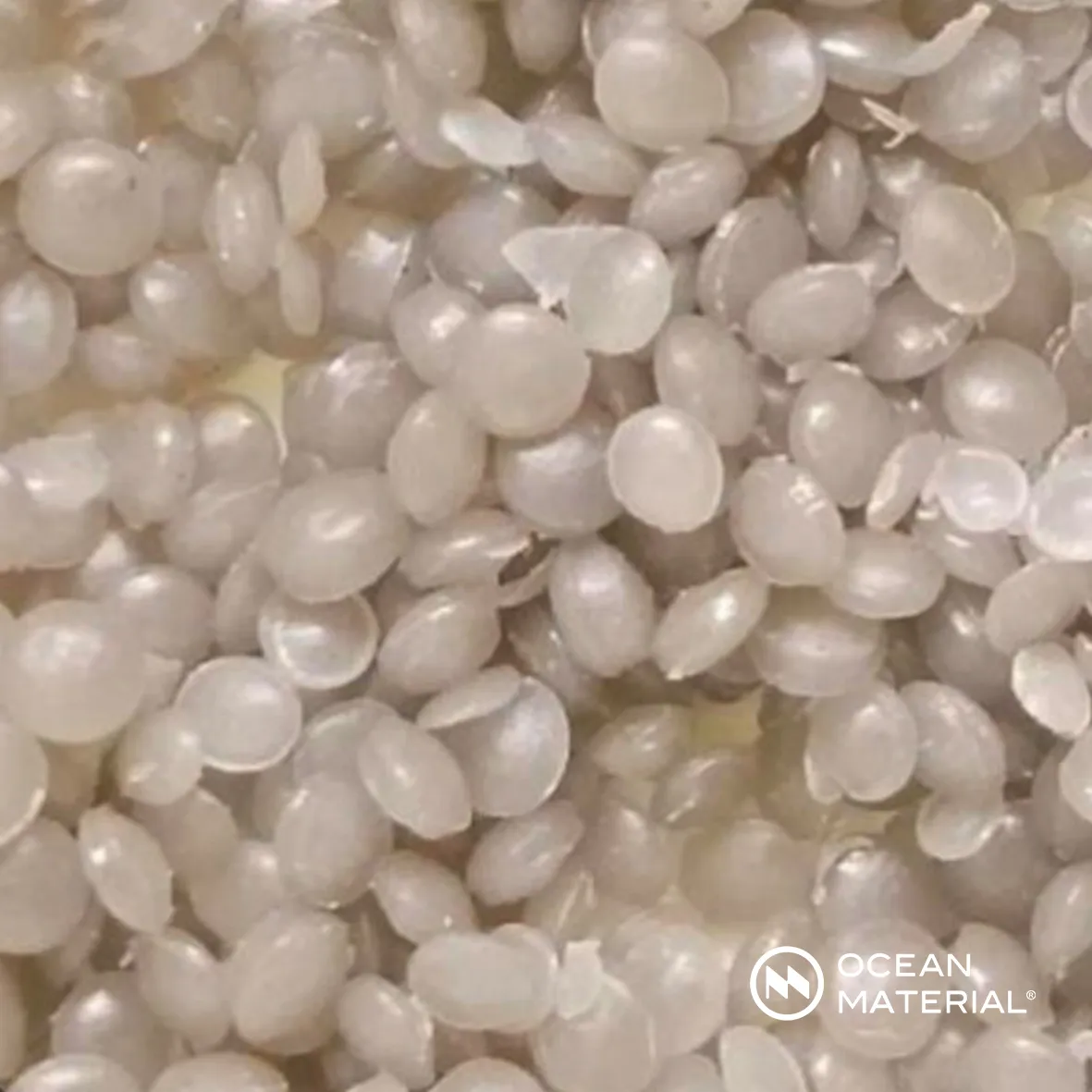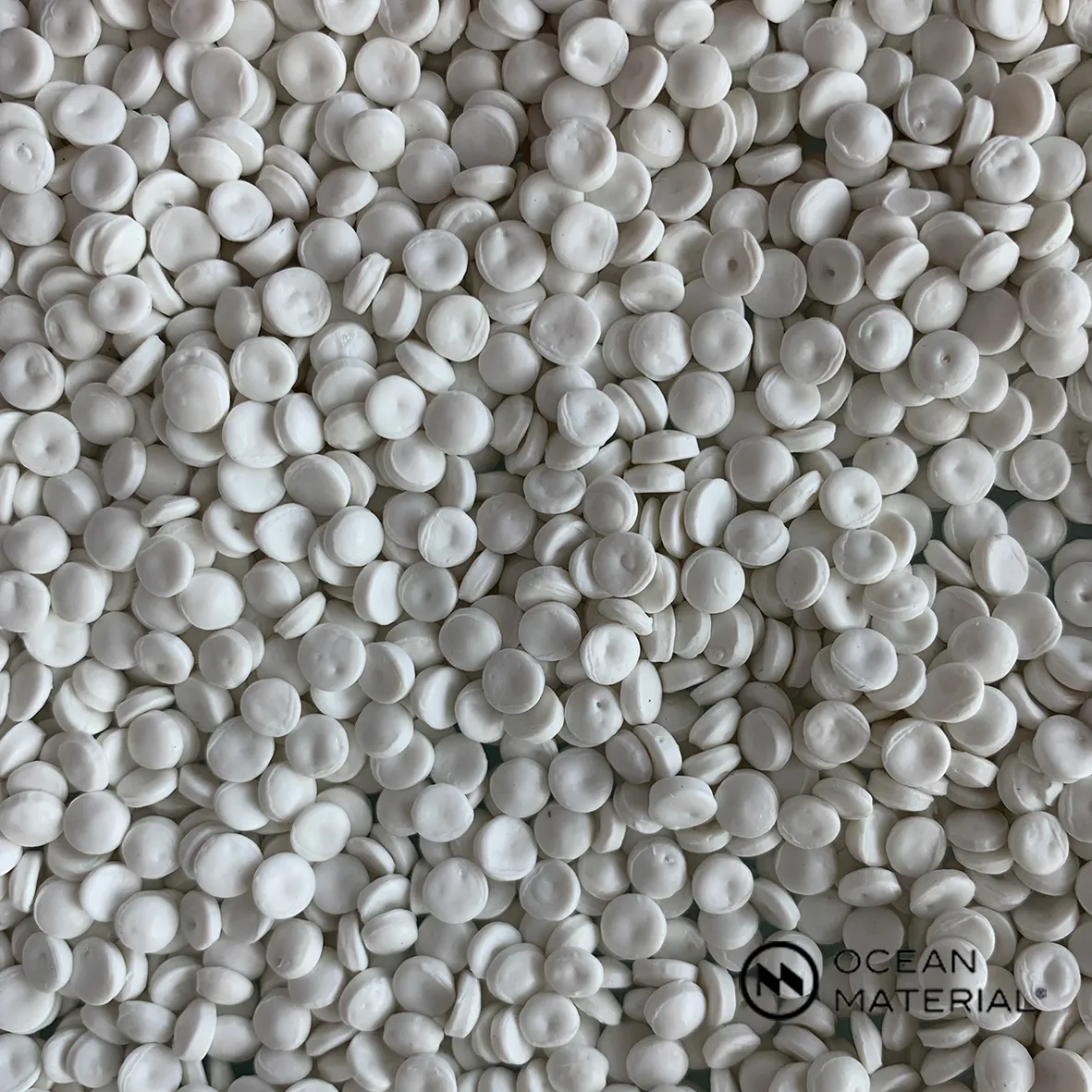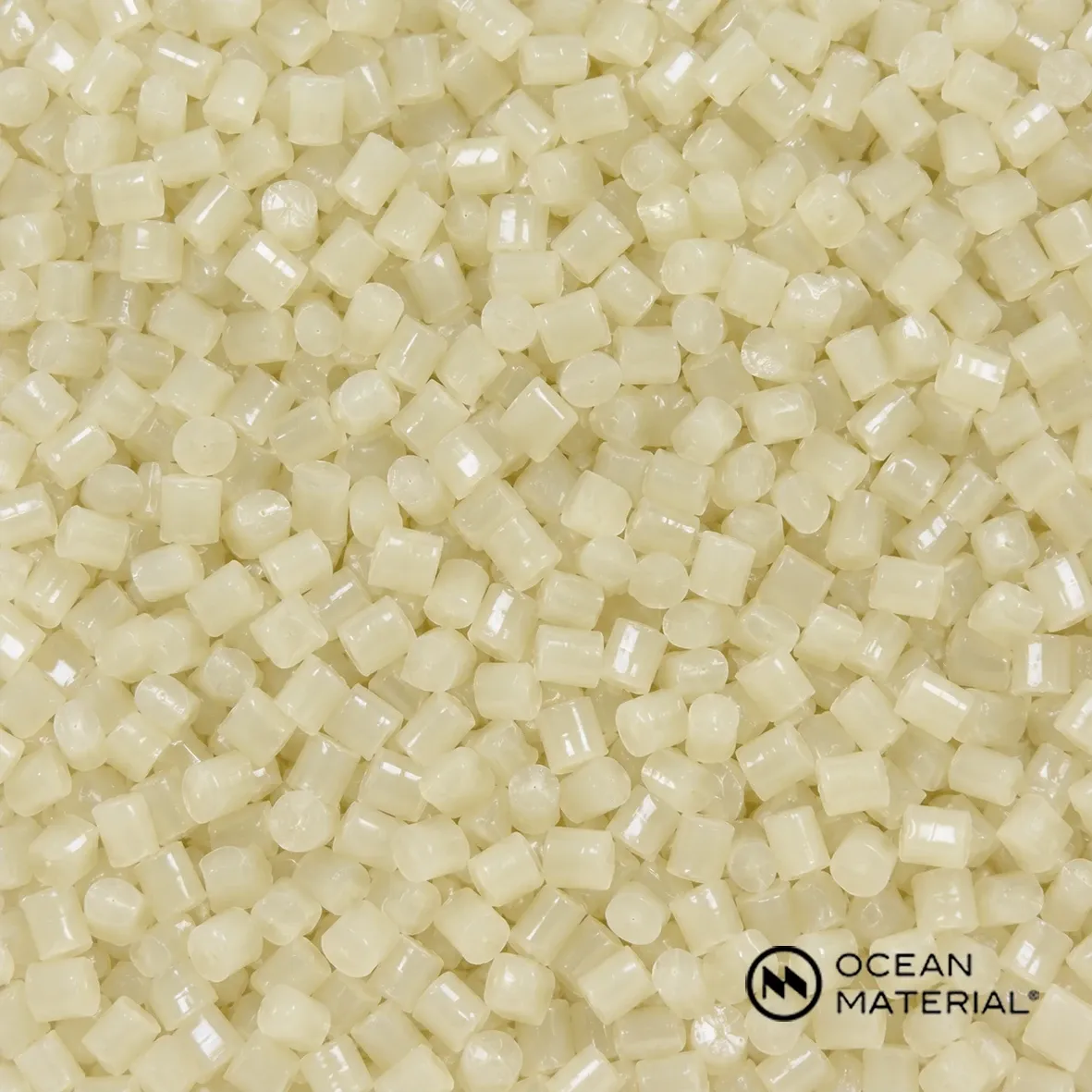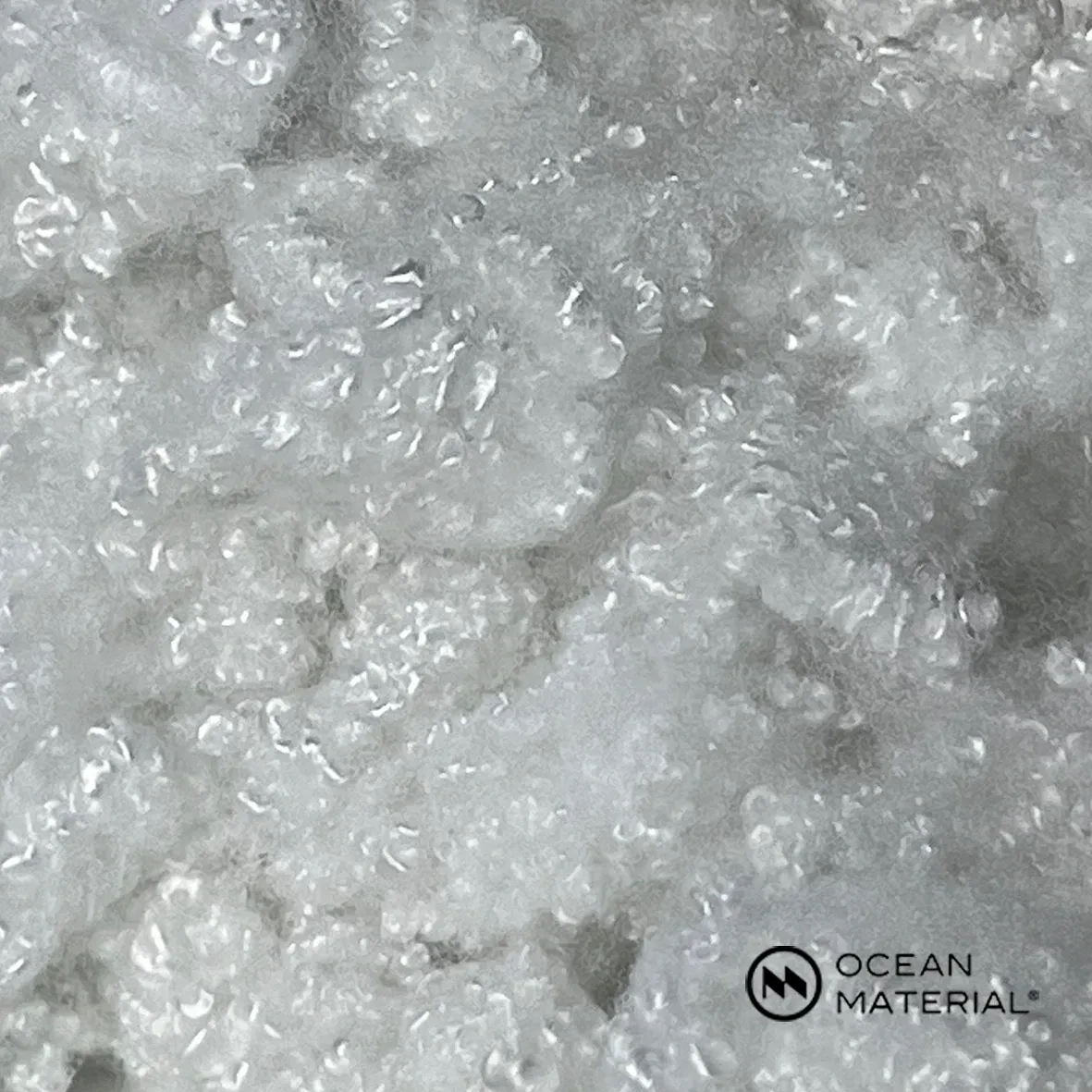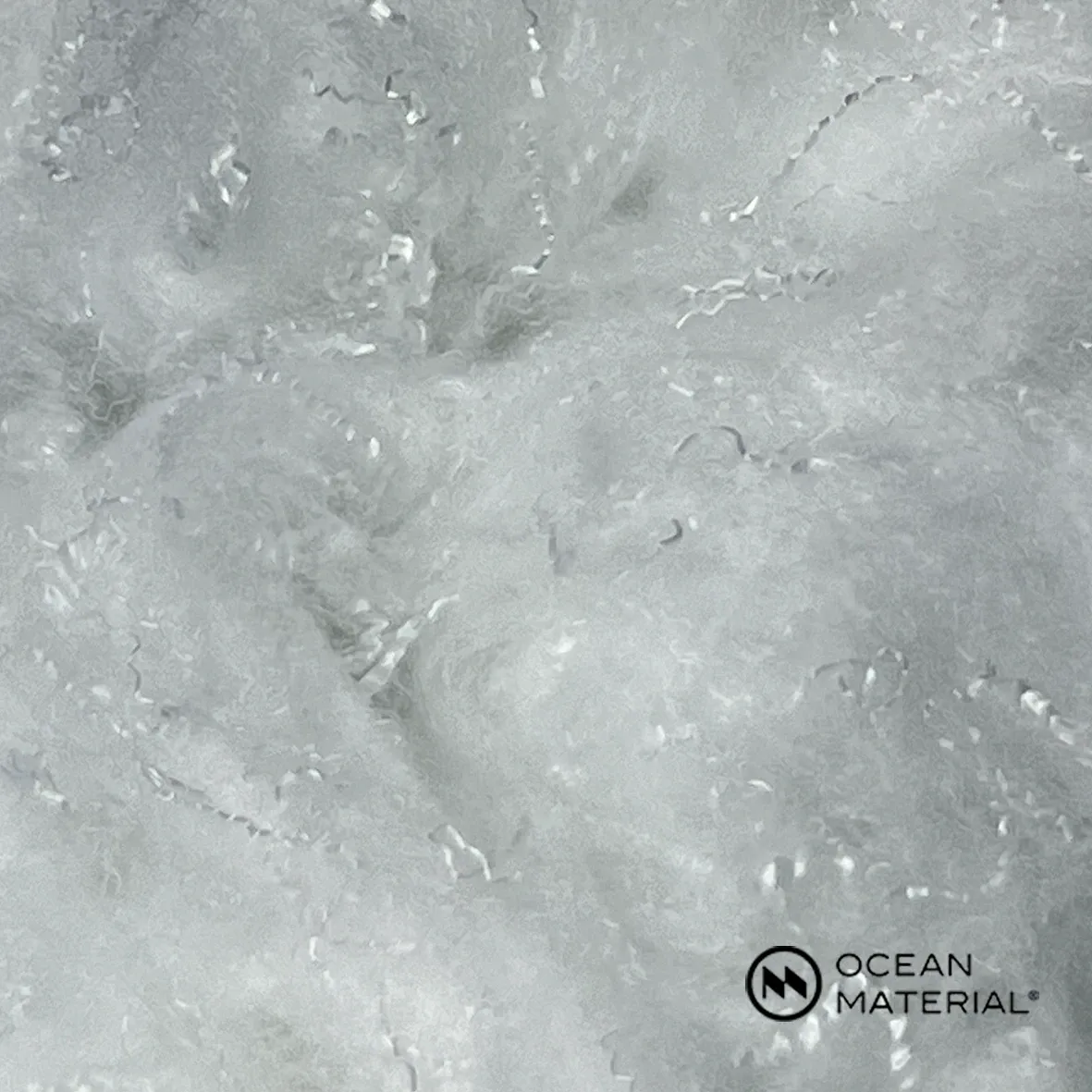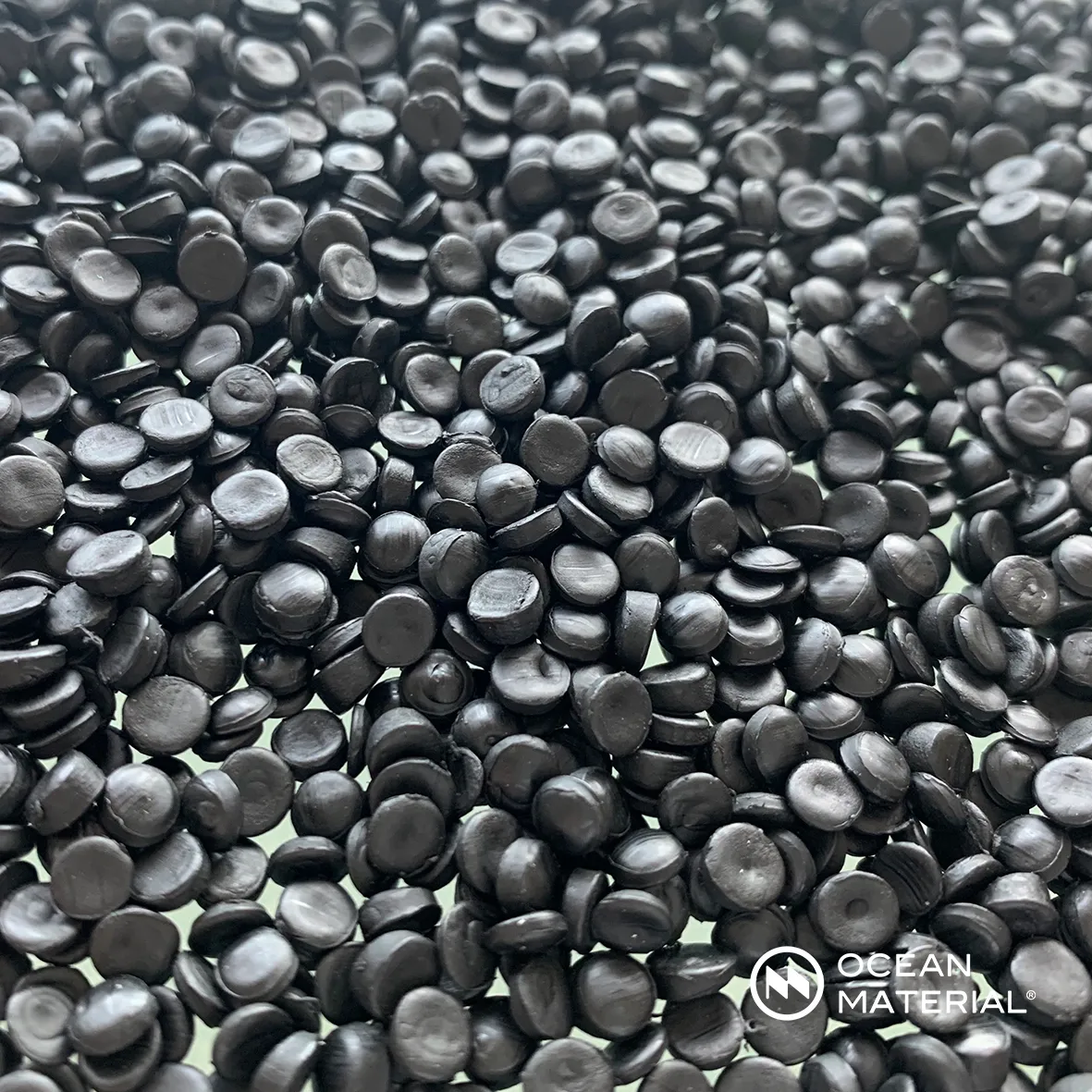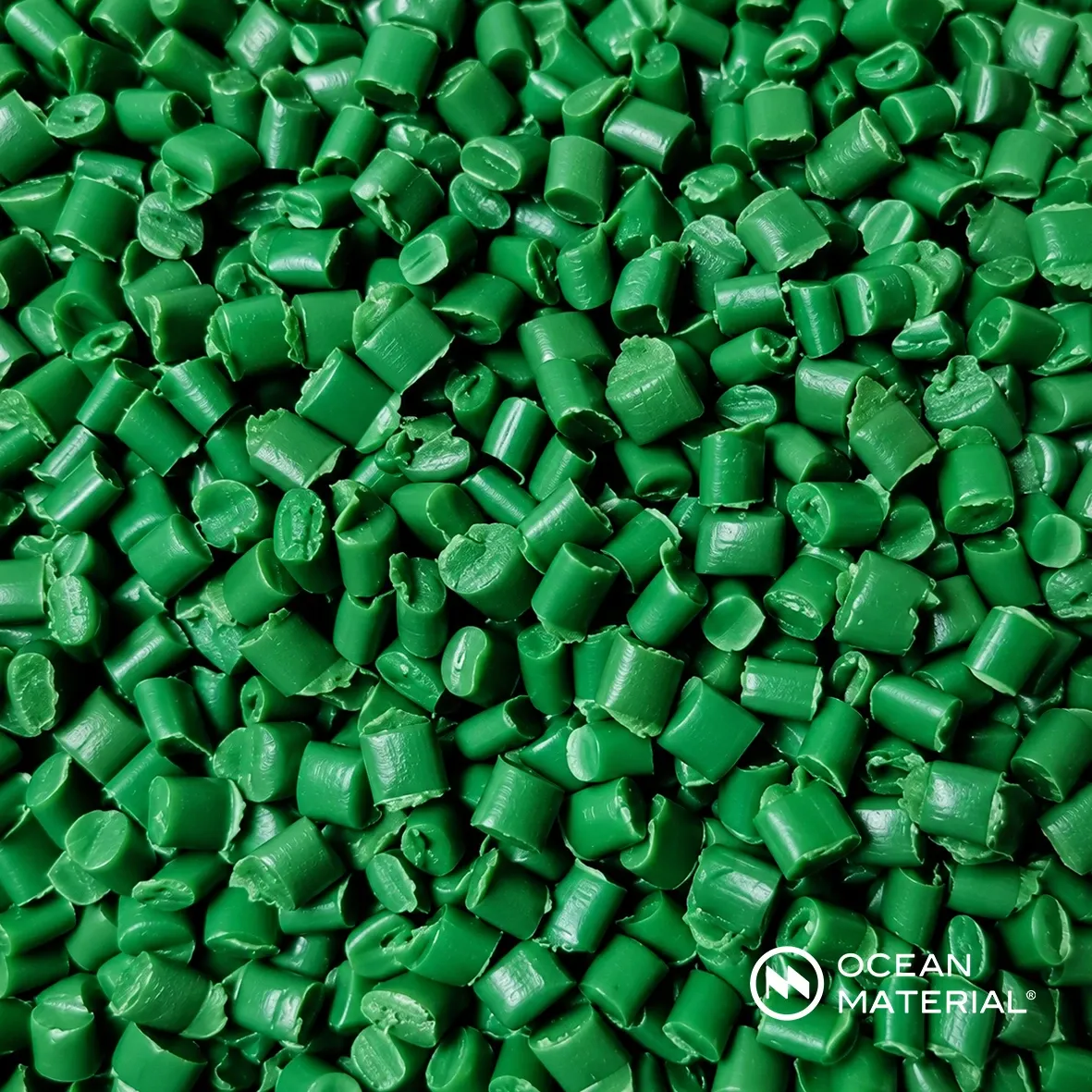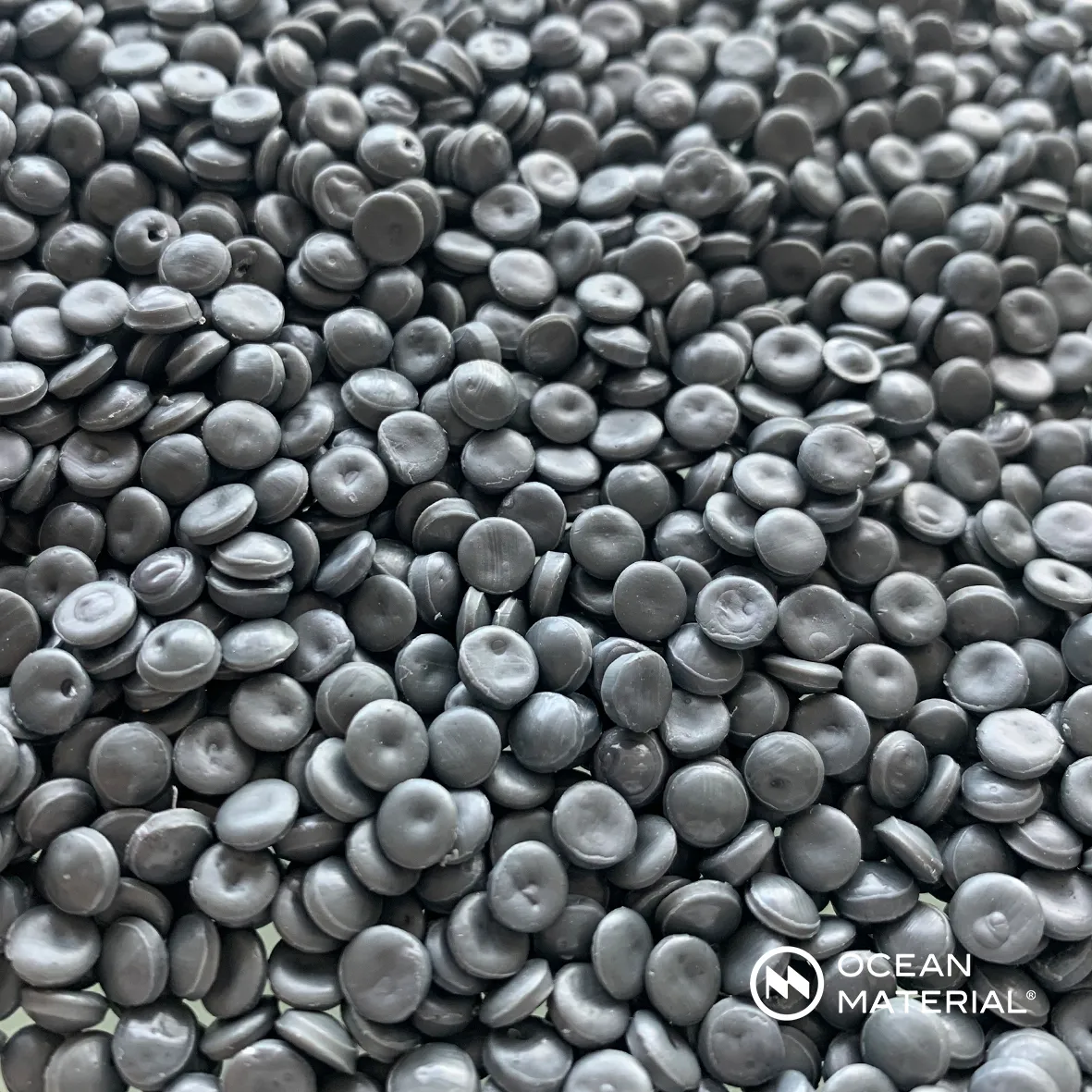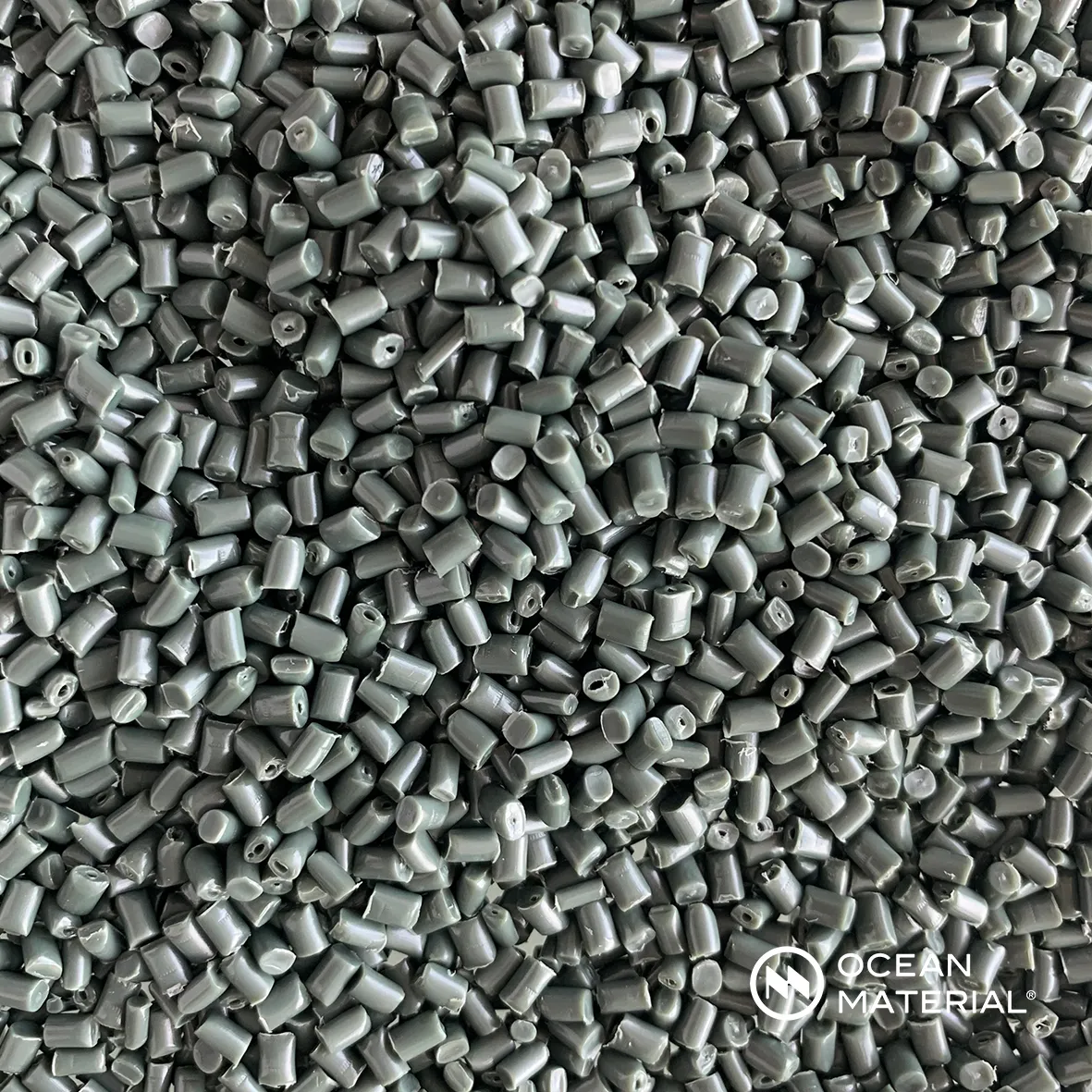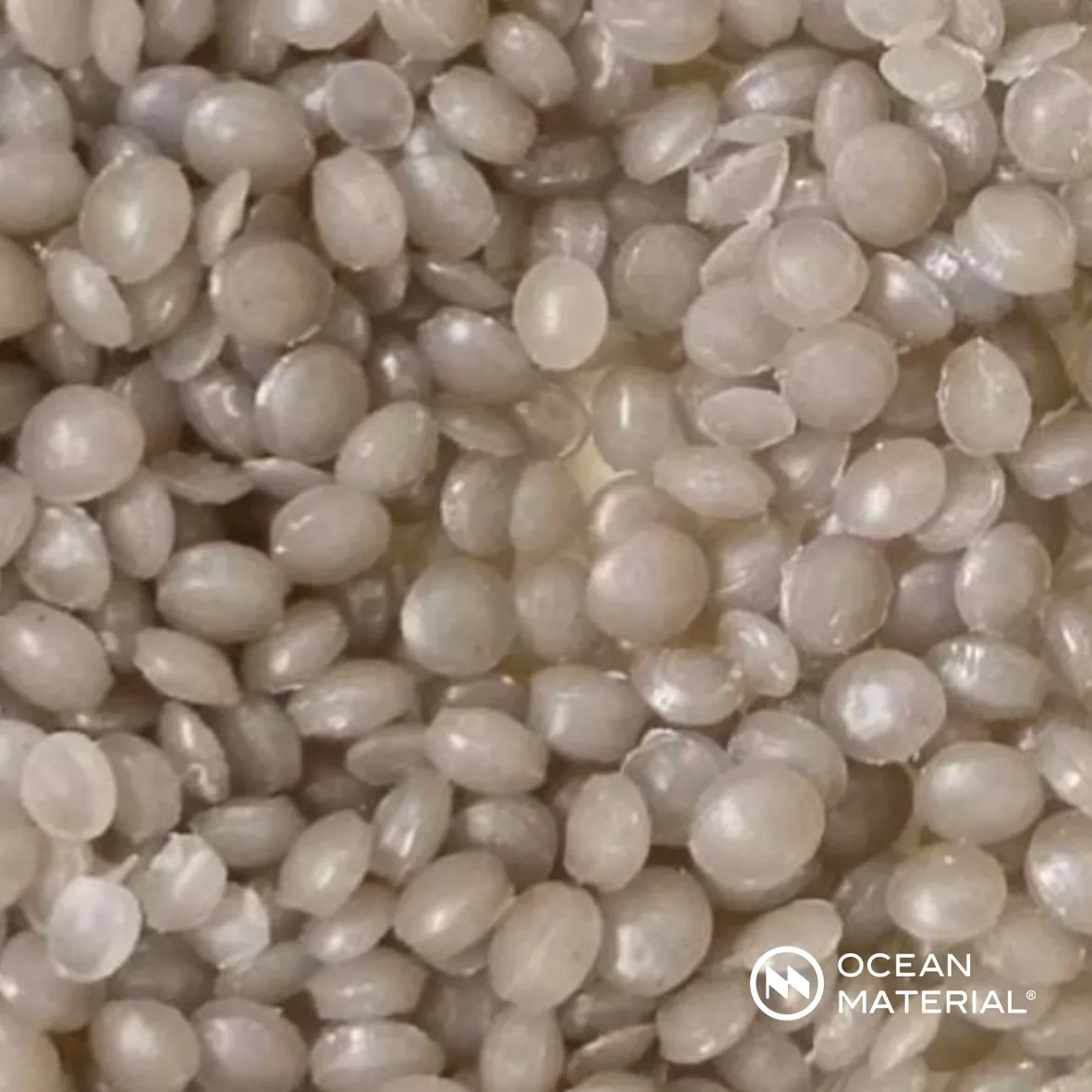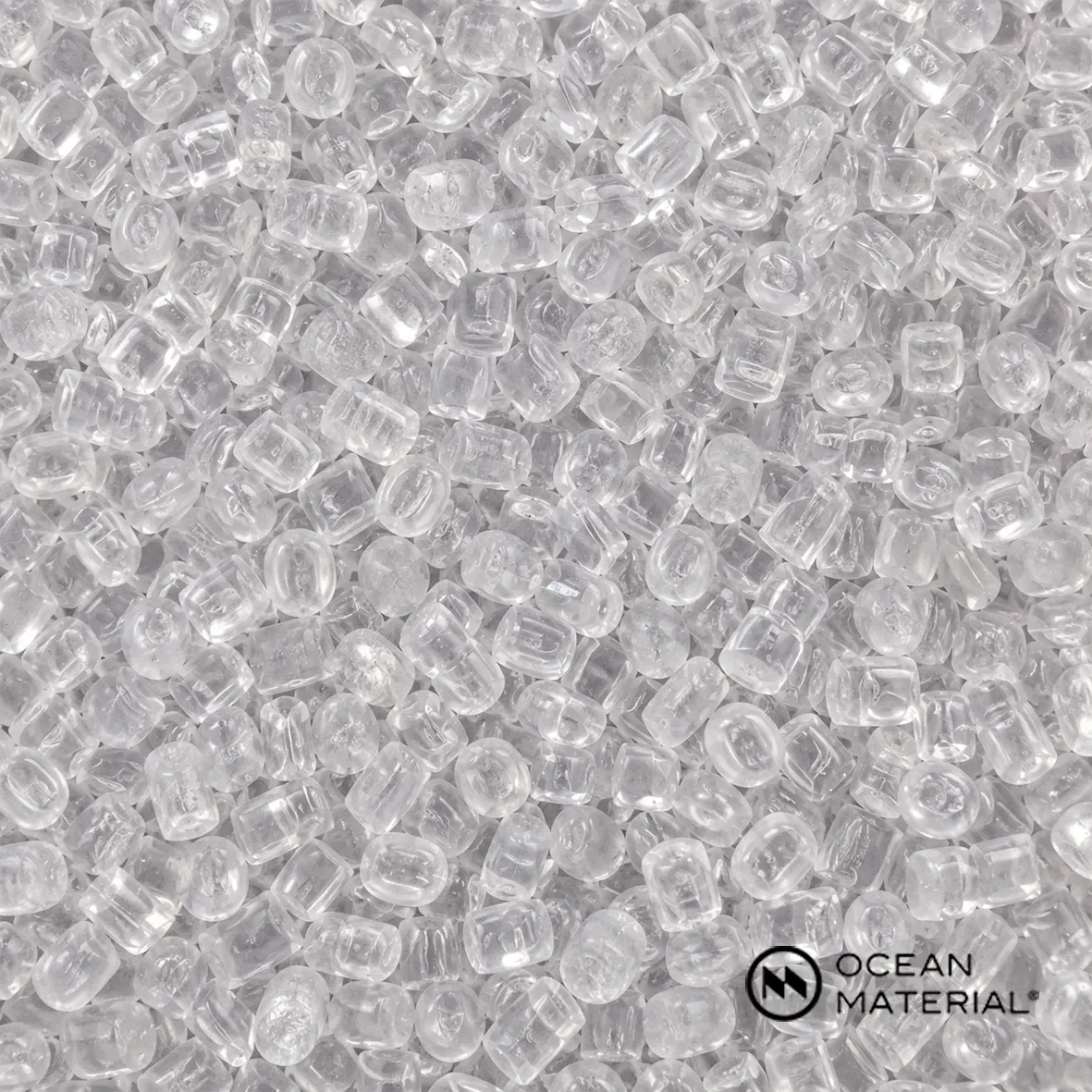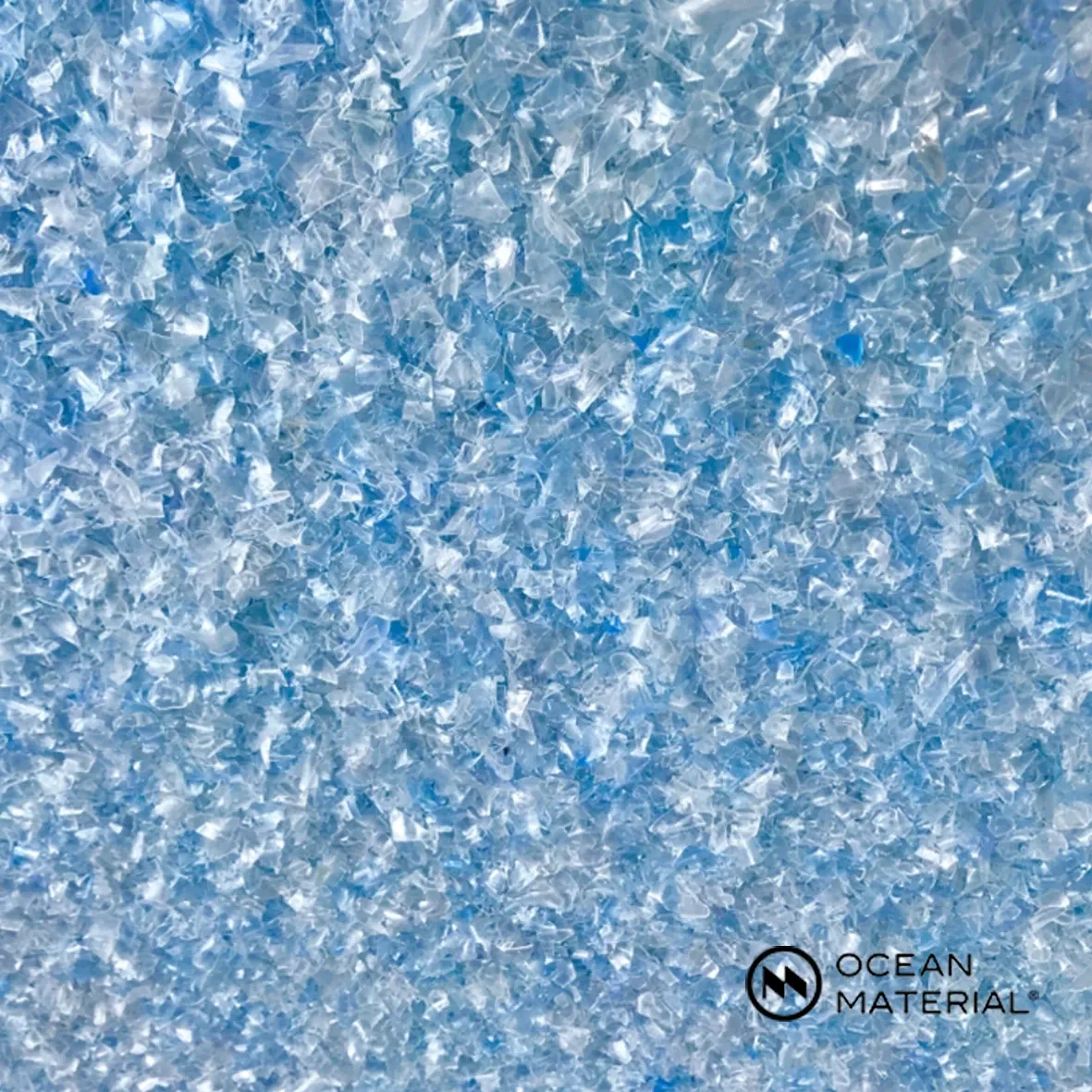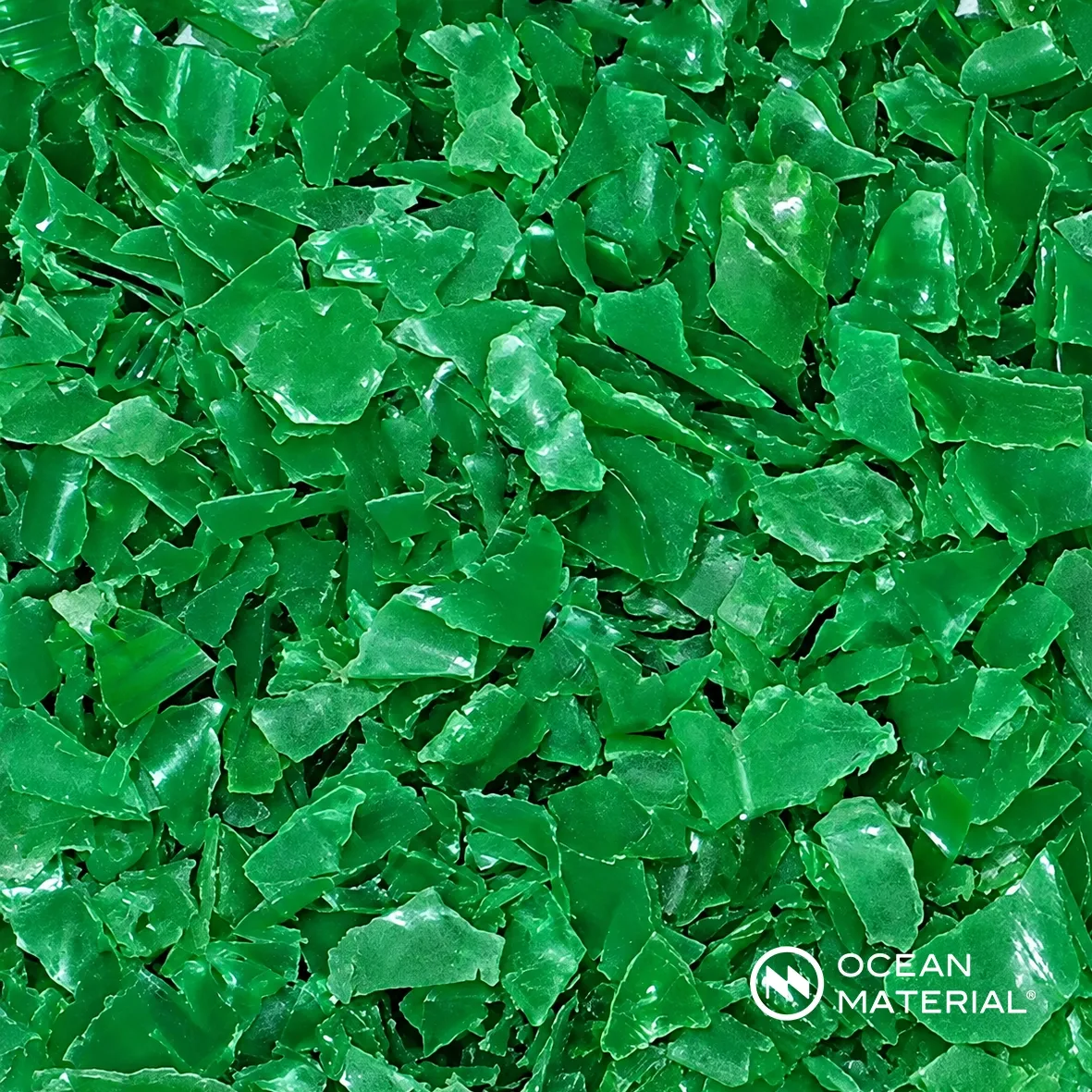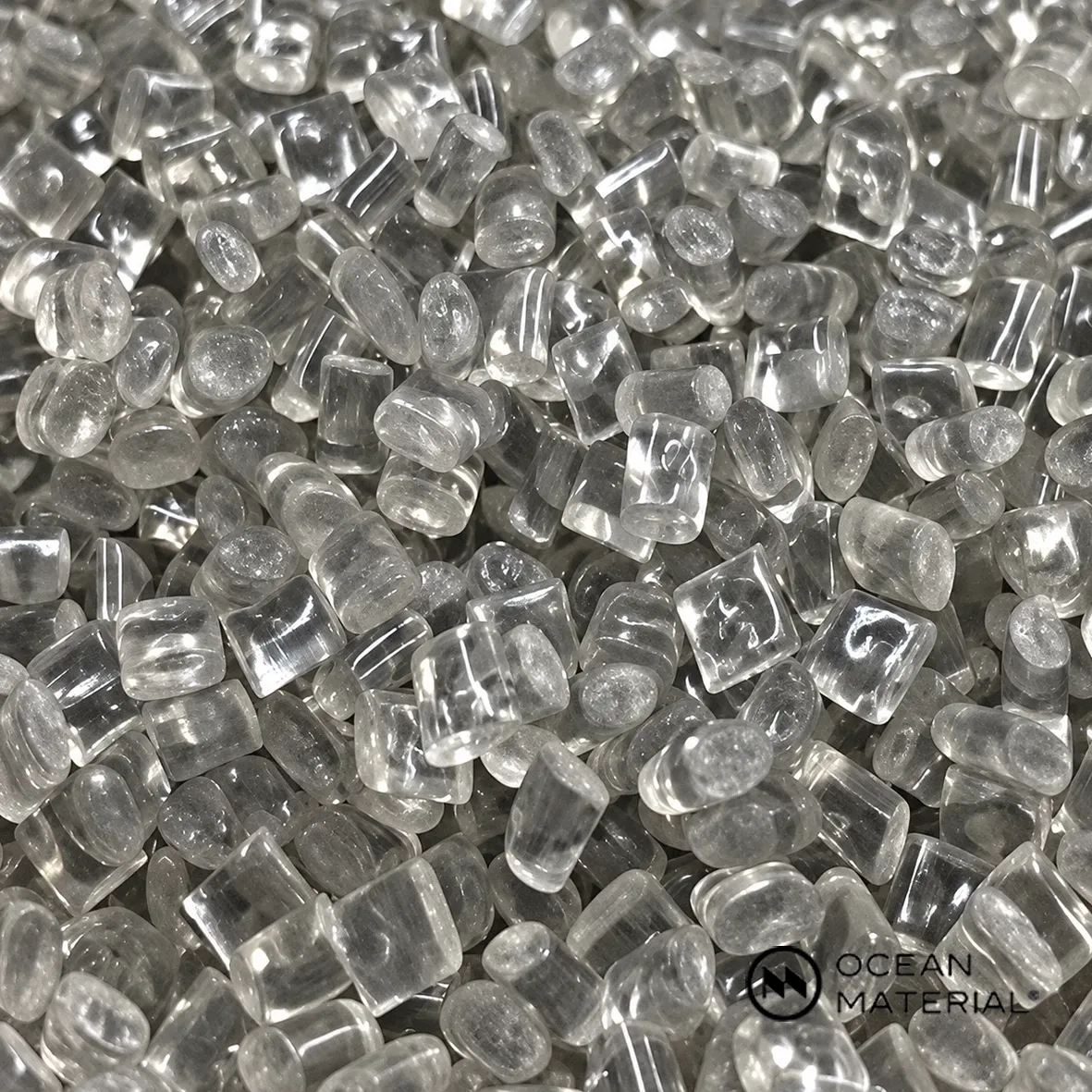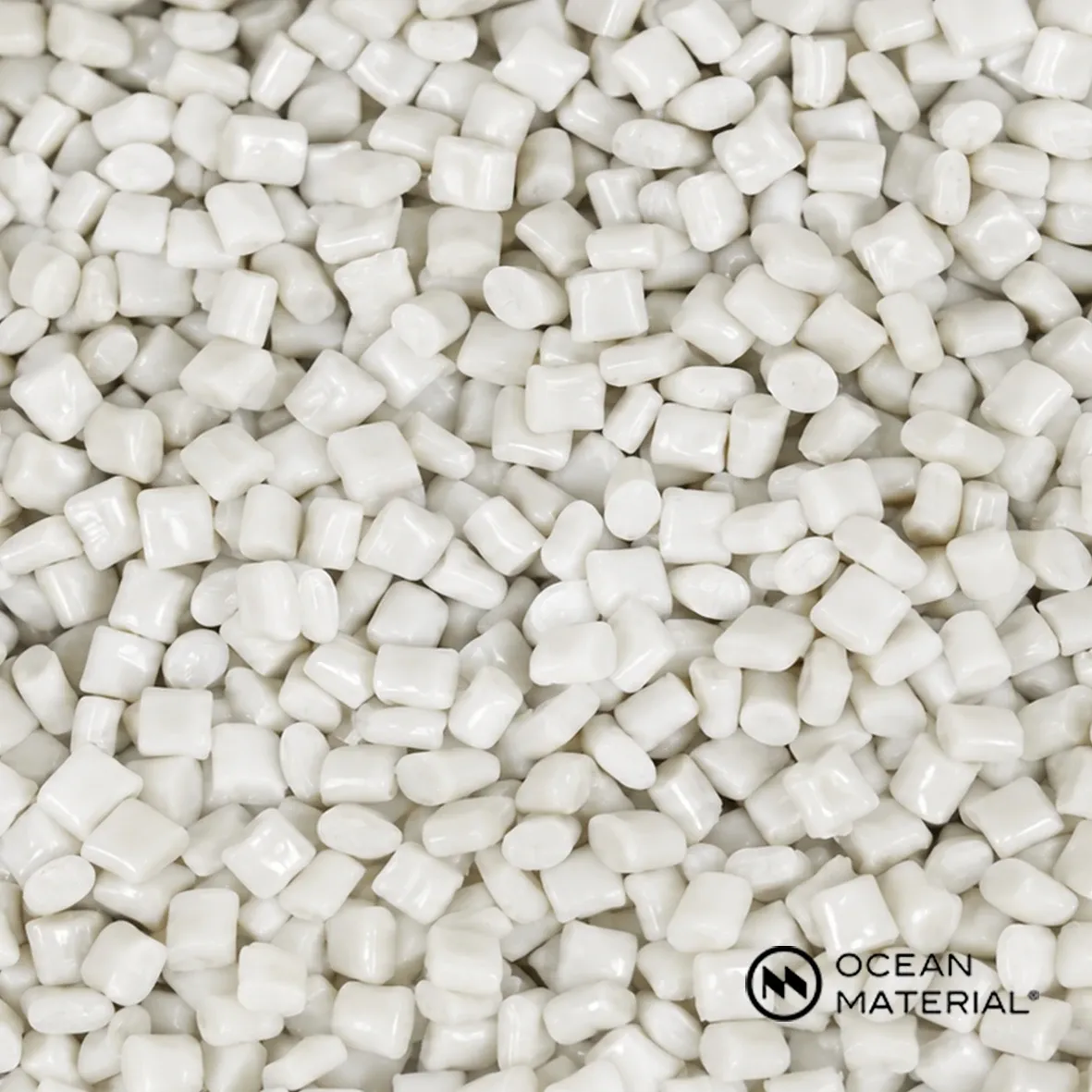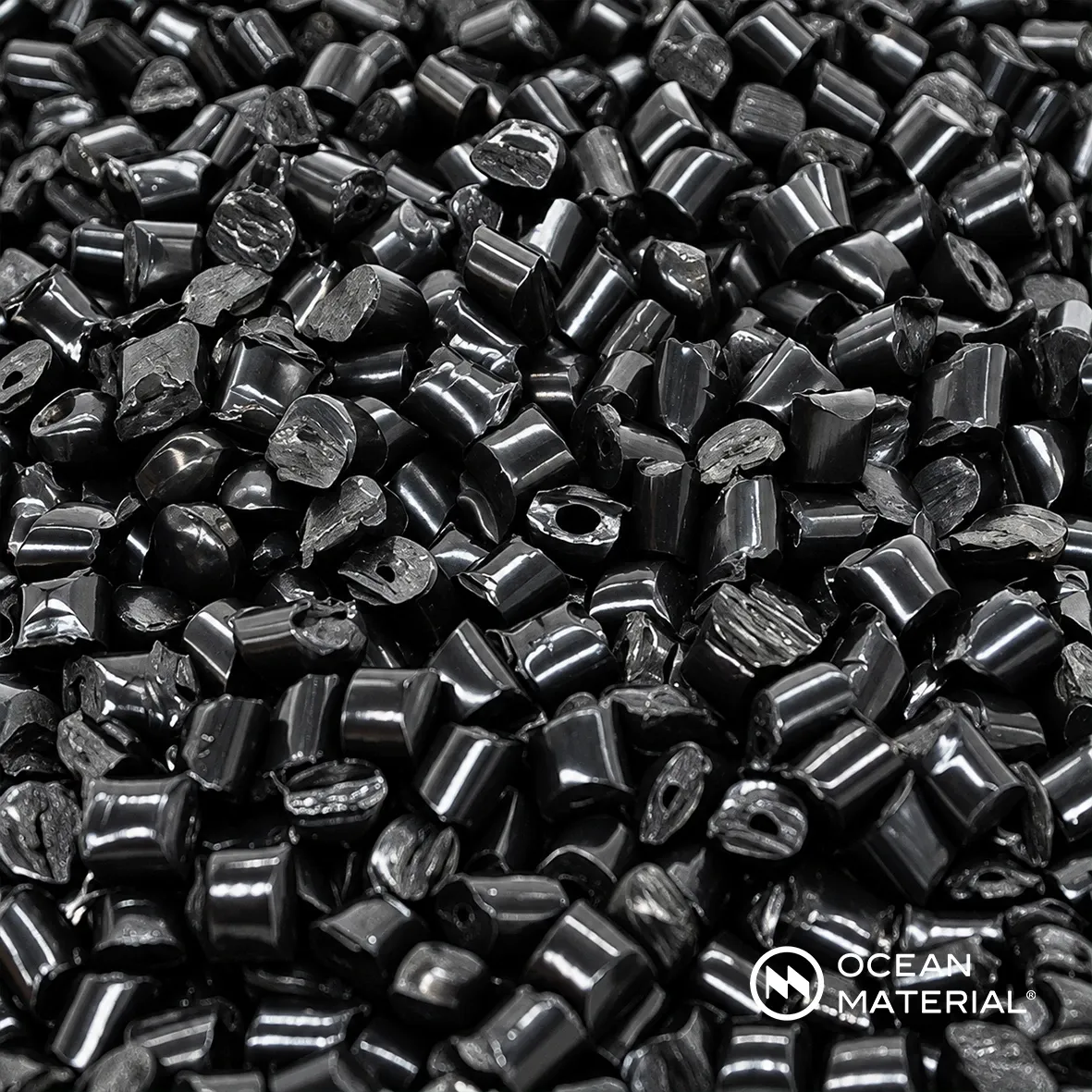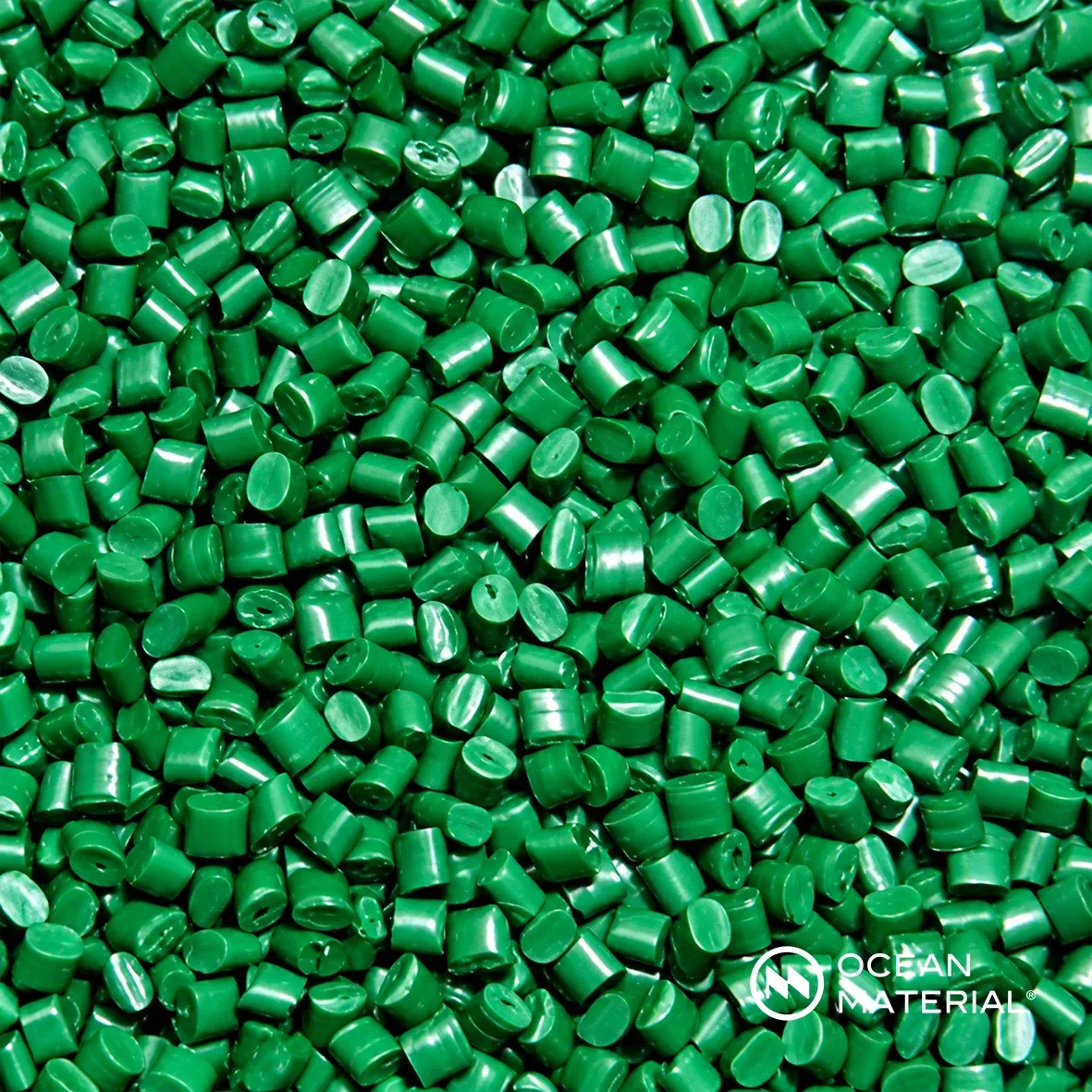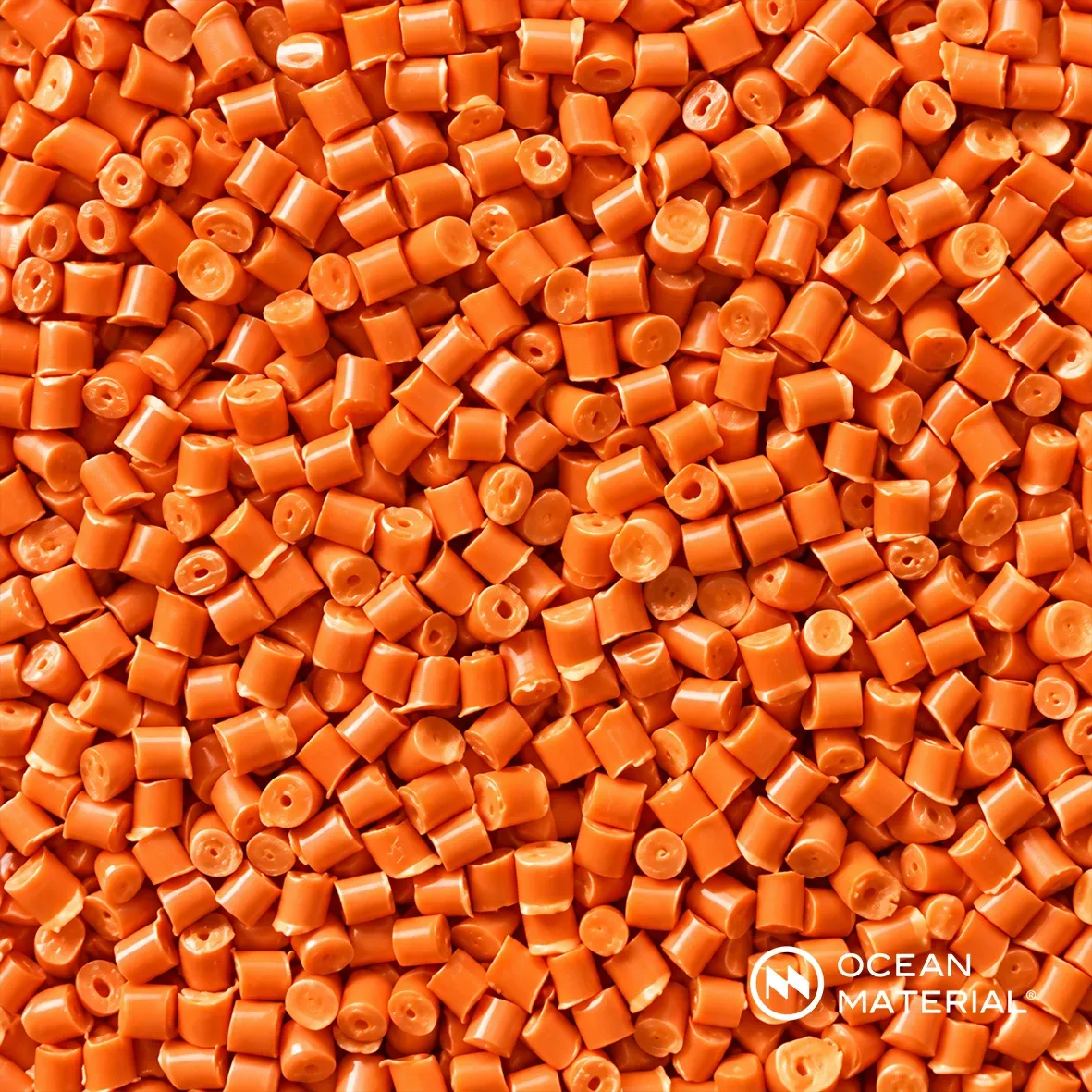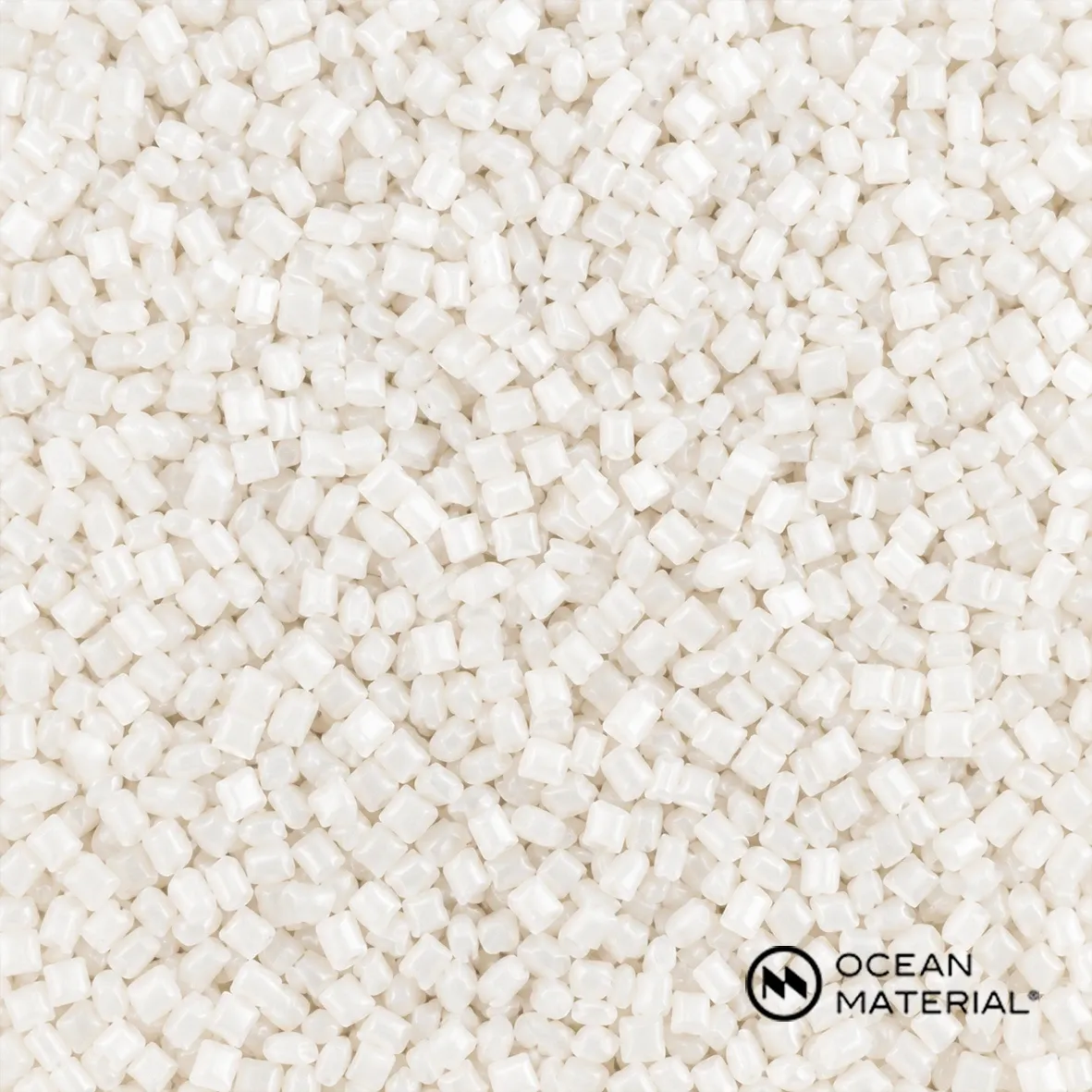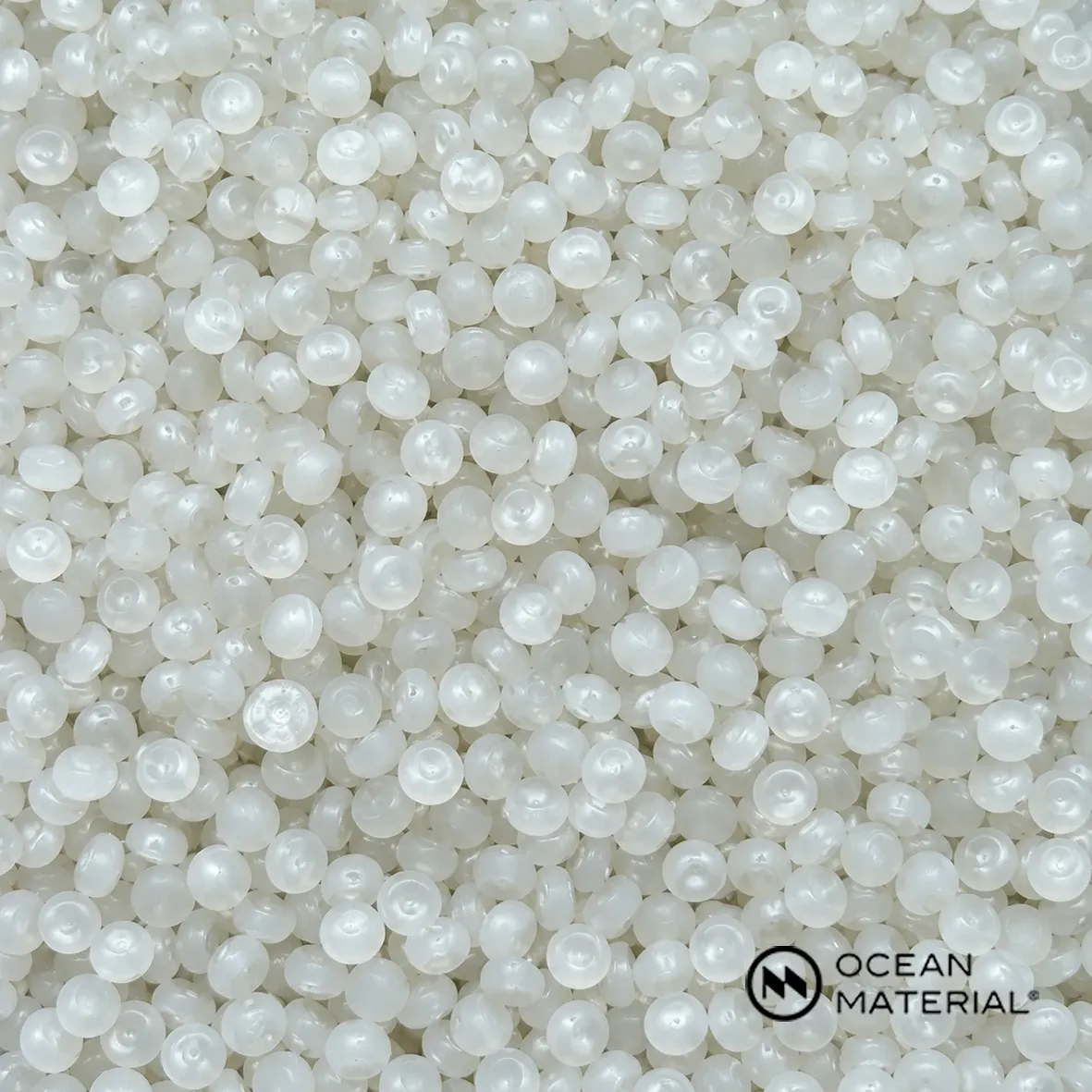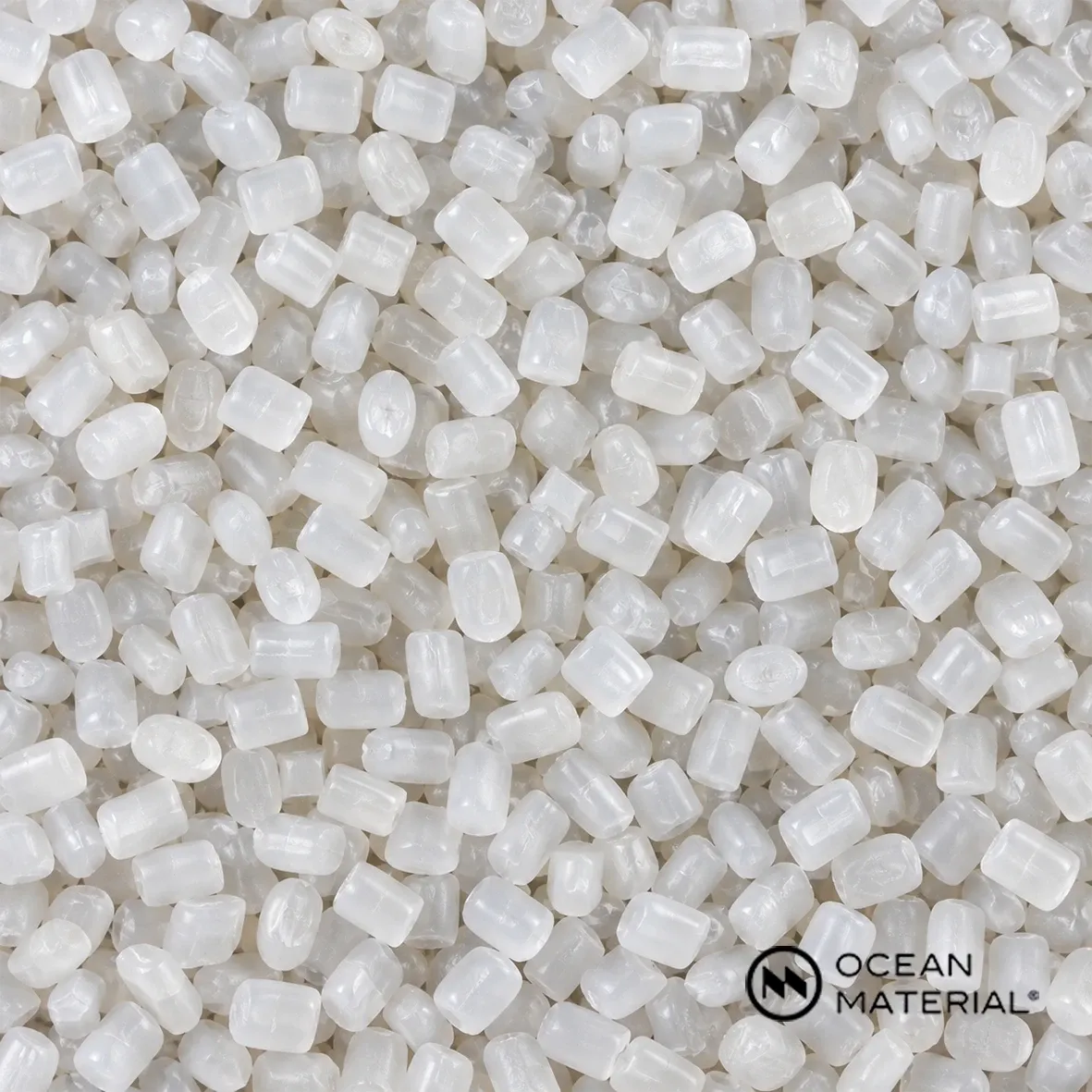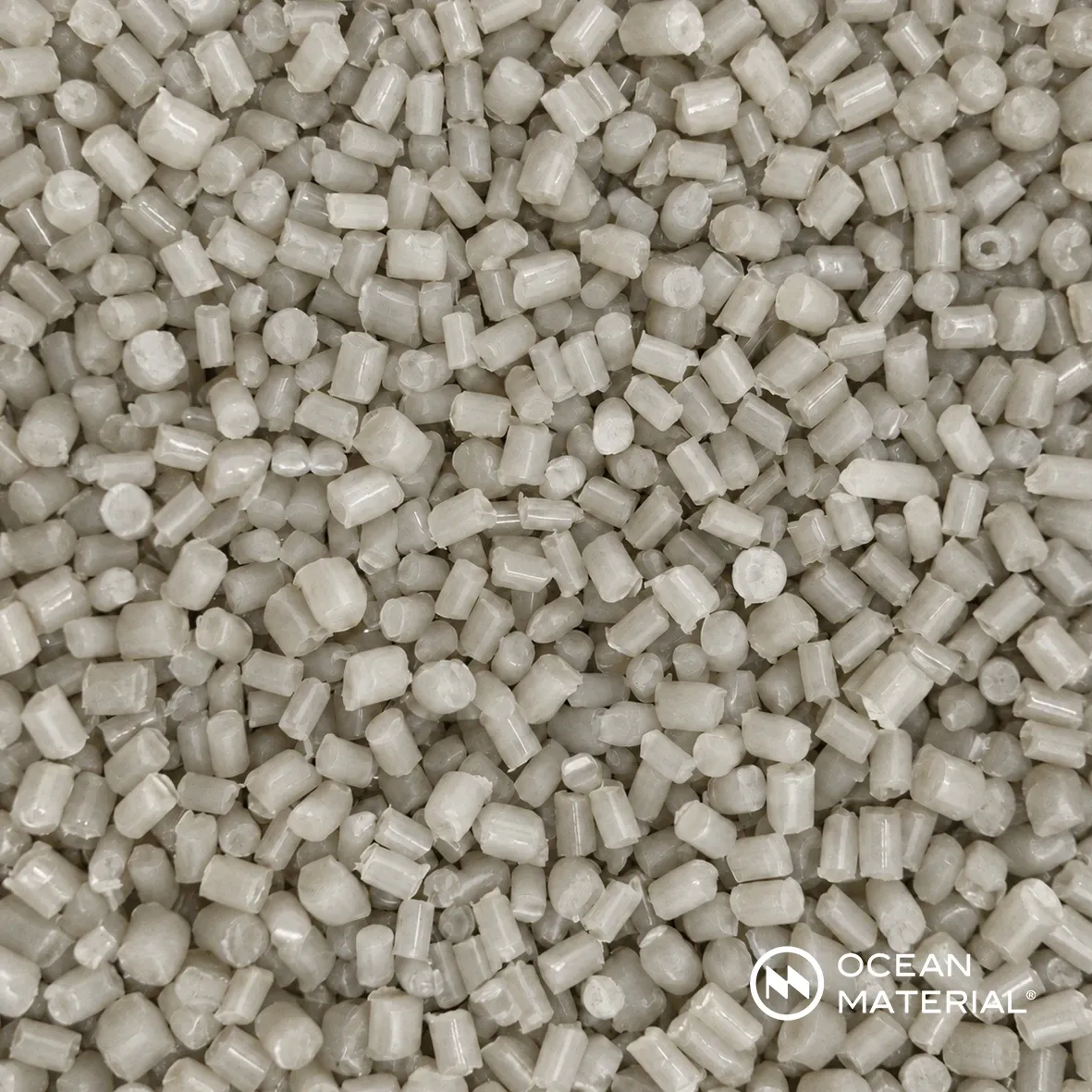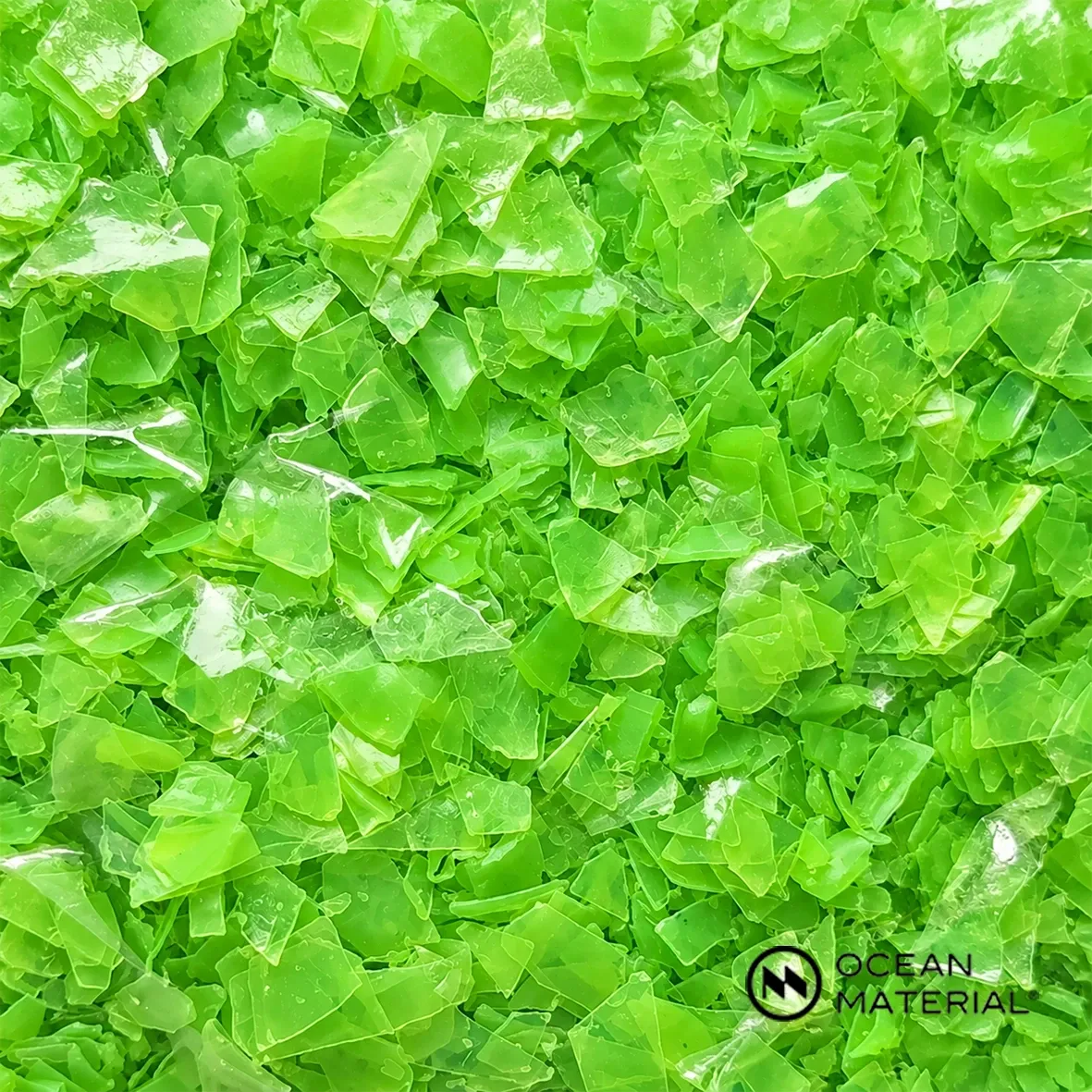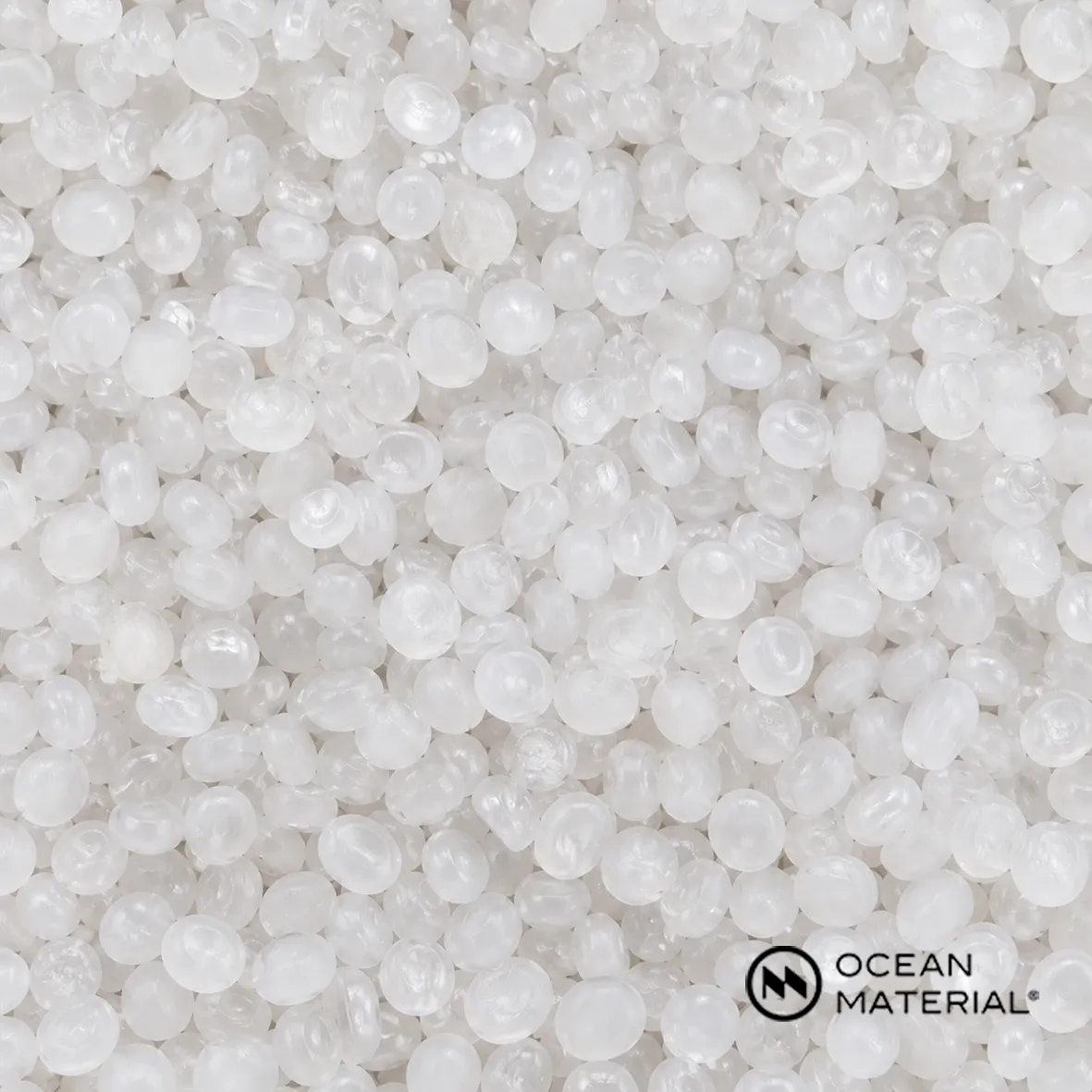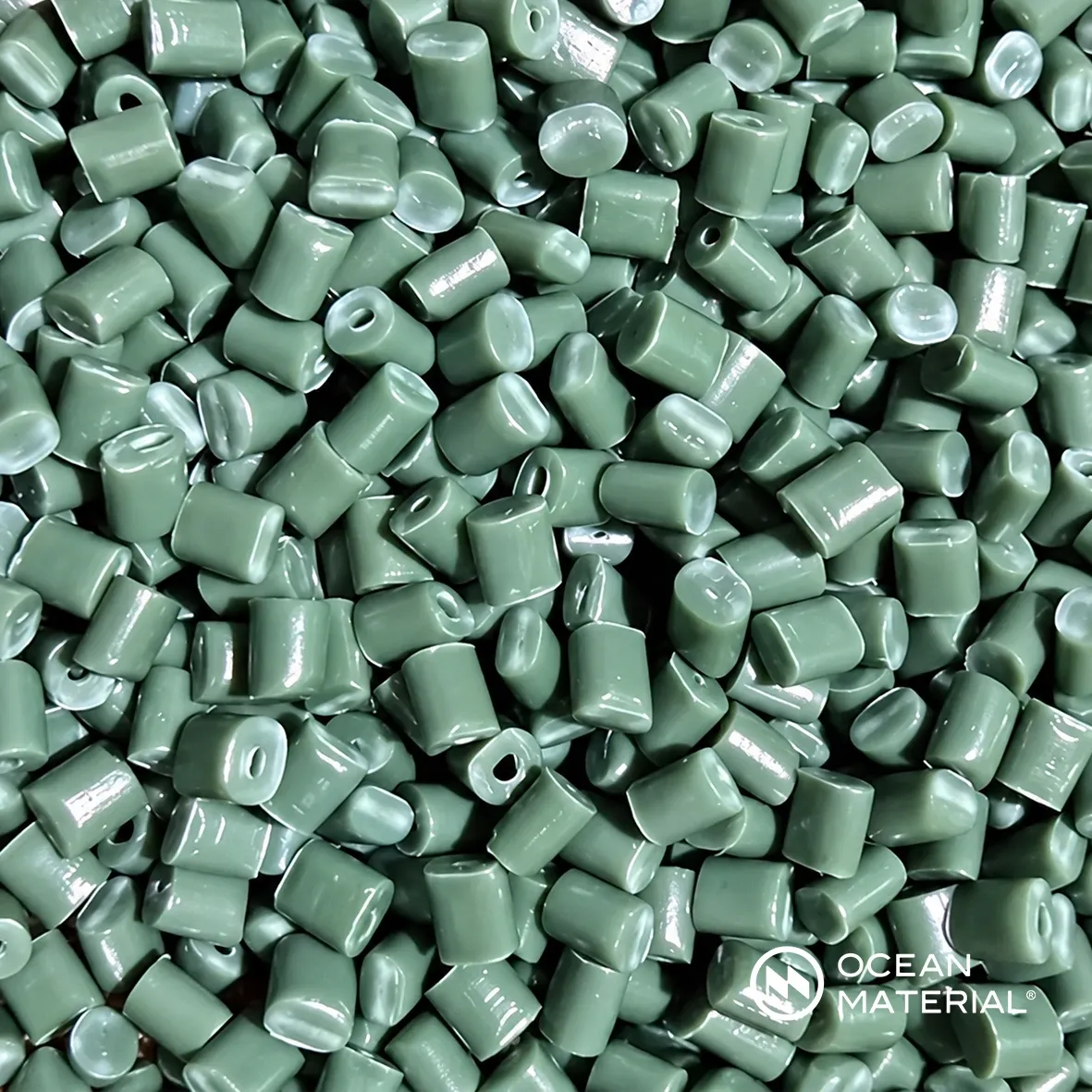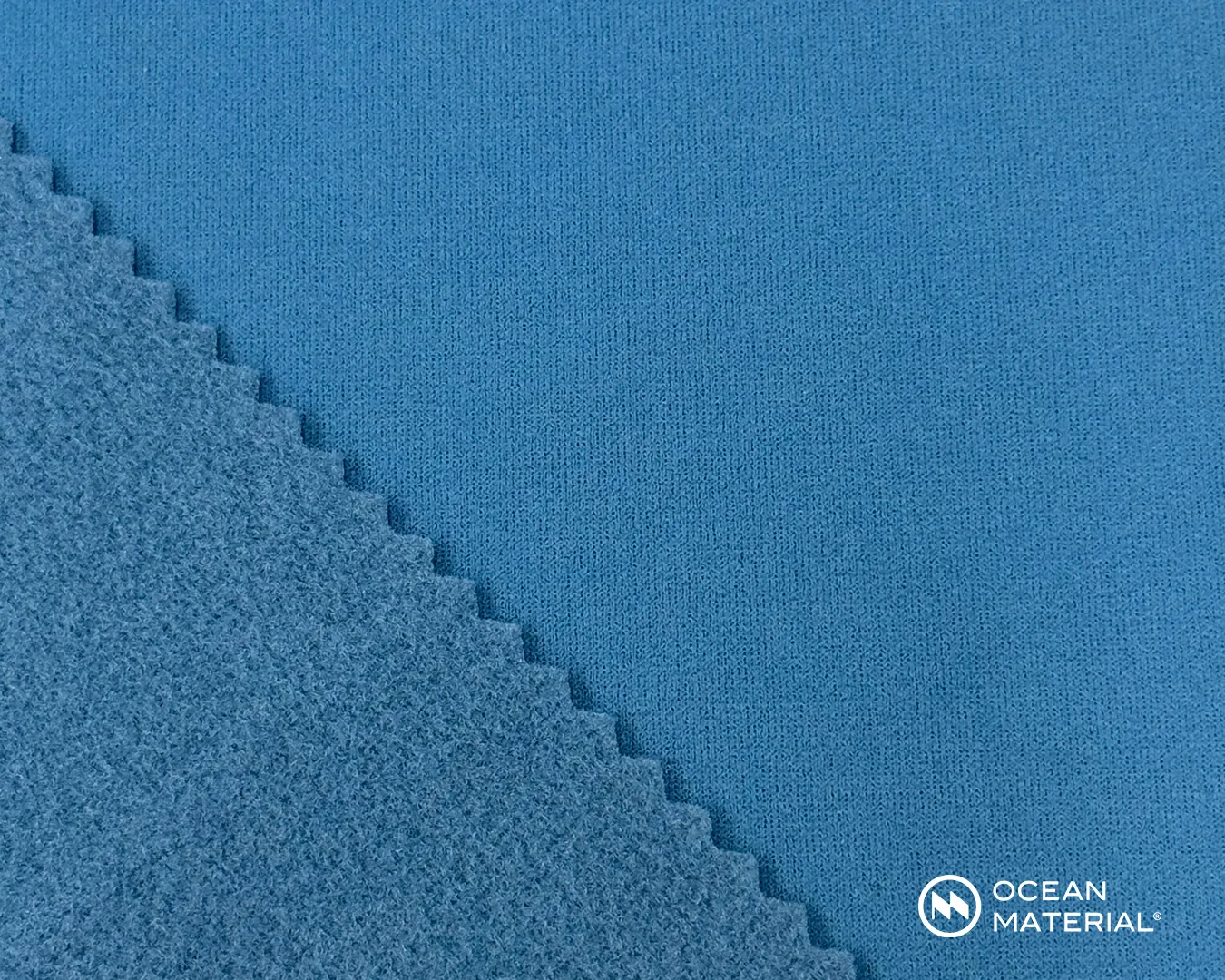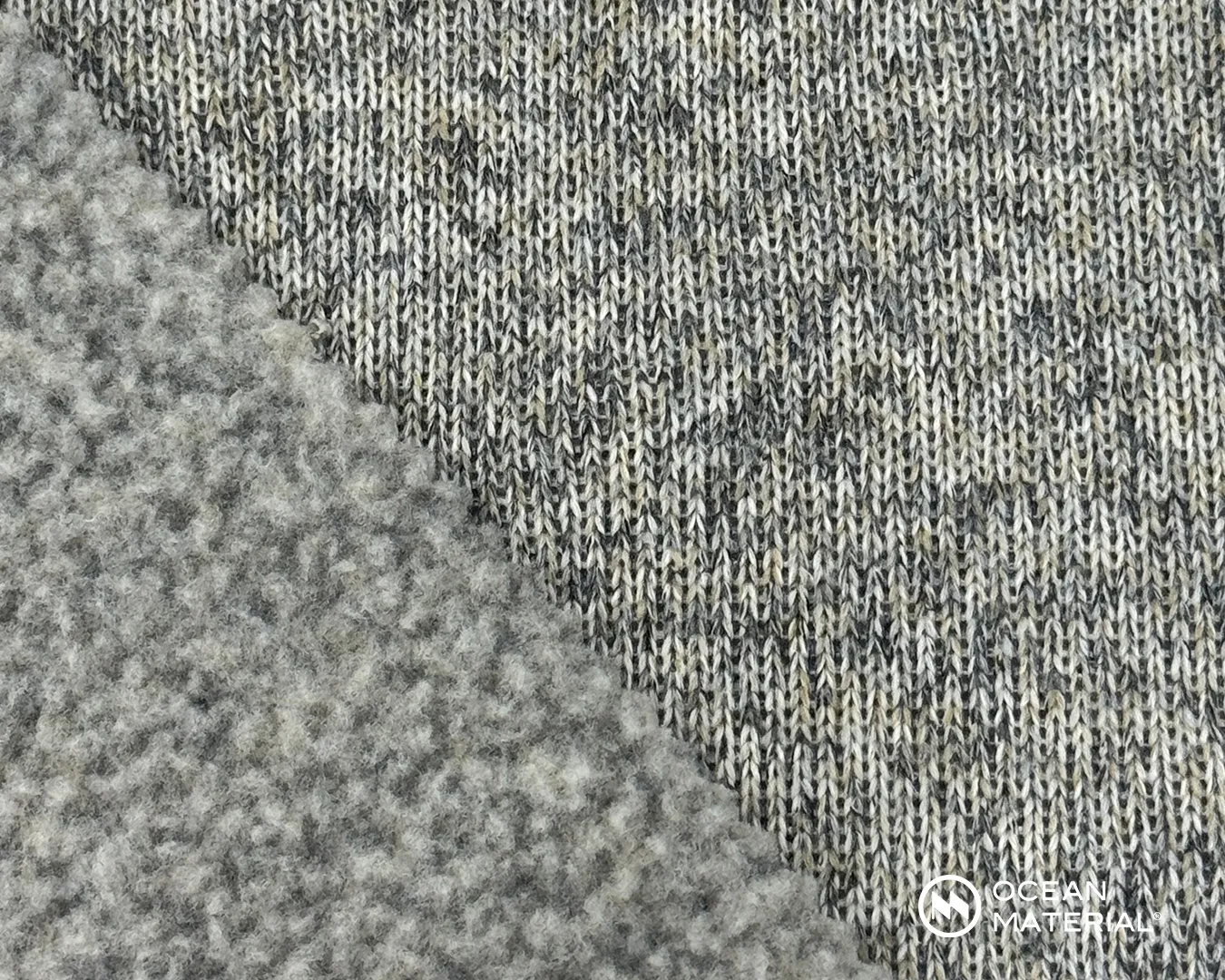
Natural-colour recycled PA6 pellets from fishing nets
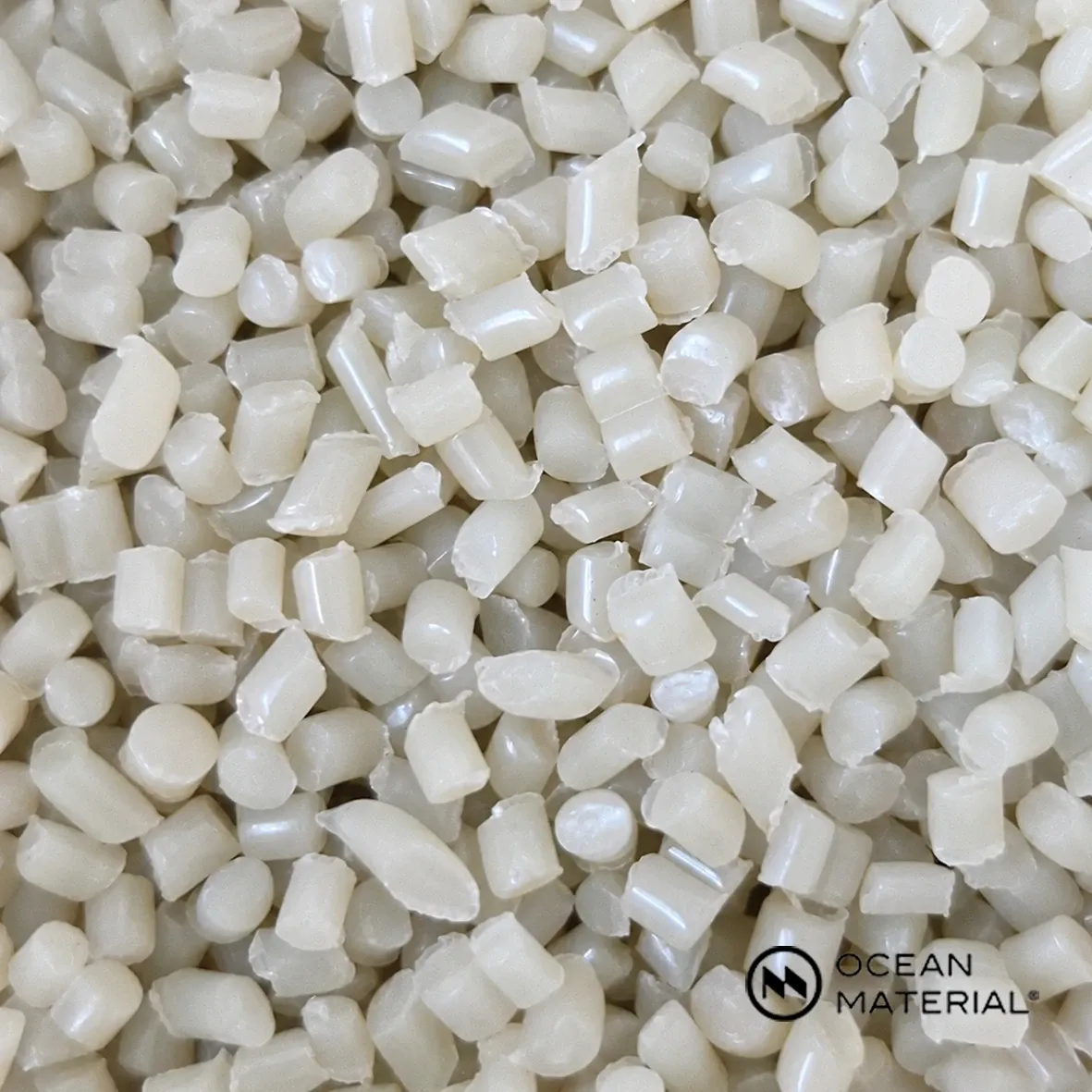
Recycled PA6 – Fishing Nets (Natural)
Granules

Ocean Material supplies recycled PA6 (nylon 6) pellets from end-of-life fishing nets and supports material selection, technical review and sample enquiries. Compare fishing-net PA6 grades for your processing requirements, or explore the finished nylon yarns and nylon-containing fabrics listed below.
Tell us about your application and processing requirements. We can help assess the options.
10 products
No products are currently listed in this category.
Granules
Granules
Granules · Yarn-production grade
Granules · Yarn-production grade
Granules · Yarn-production grade
Granules
Granules
Granules
Finished yarn
Finished yarn
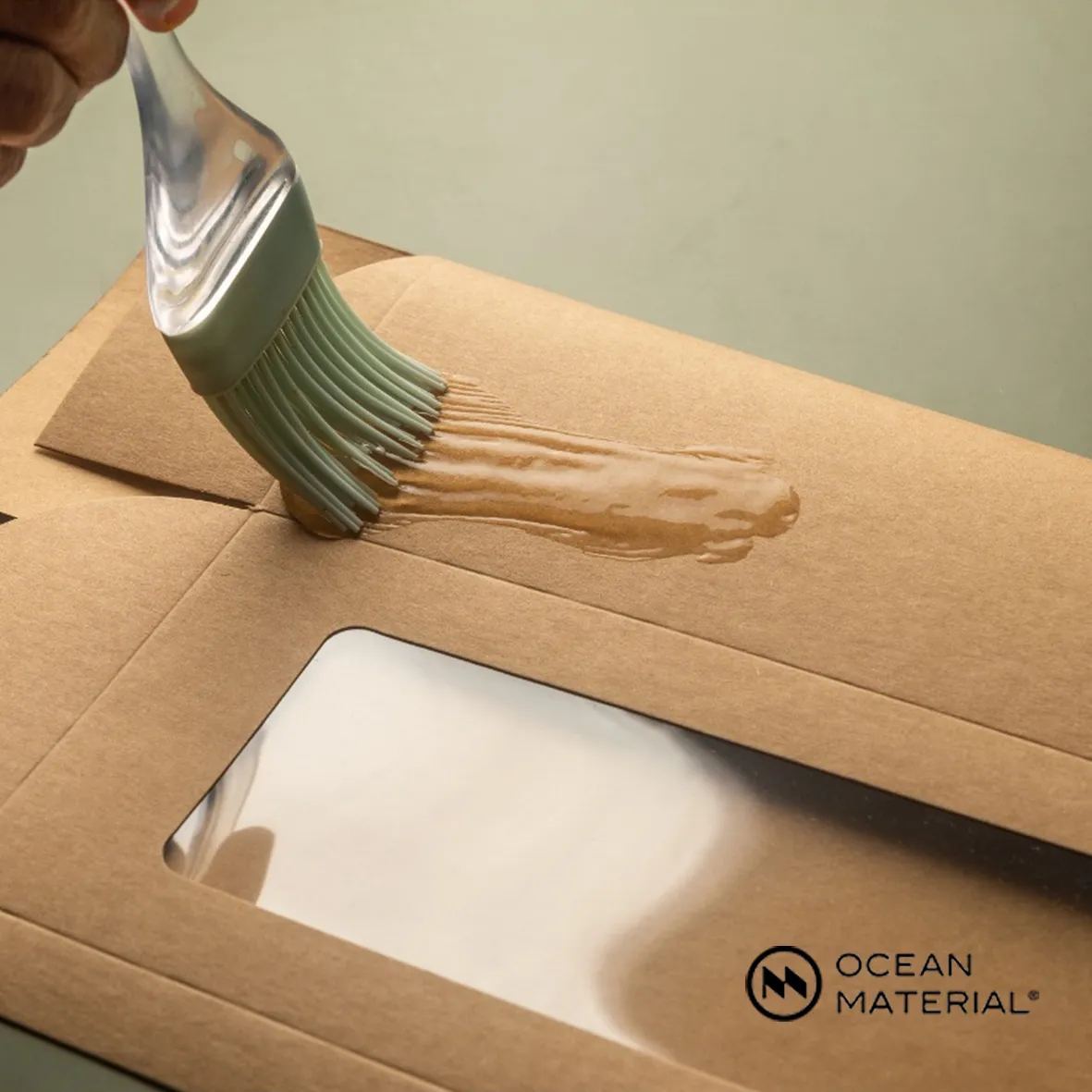
Coating formulation · Coated kraft paper
Flexible film
Not commercially available. Sampling, quantities and lead times to be confirmed.
Sheet
R&D · Not commercially available
Not commercially available. Sampling, quantities and lead times to be confirmed.
Granules
R&D · Not commercially available
Finished yarn
Granules
Granules
Granules
Flakes
Granules
Granules
Granules
Granules
Staple fibre
Staple fibre
Granules
Granules
Granules
Granules
Granules
Granules
Flakes
Flakes
Granules
Granules
Granules
Granules
Granules
Commercial supply under development. Sample orders accepted; quantities and lead times to be confirmed.
Granules
Commercial supply in development
Granules
Commercial supply under development. Sample orders accepted; quantities and lead times to be confirmed.
Granules
Commercial supply in development
Granules
Flakes
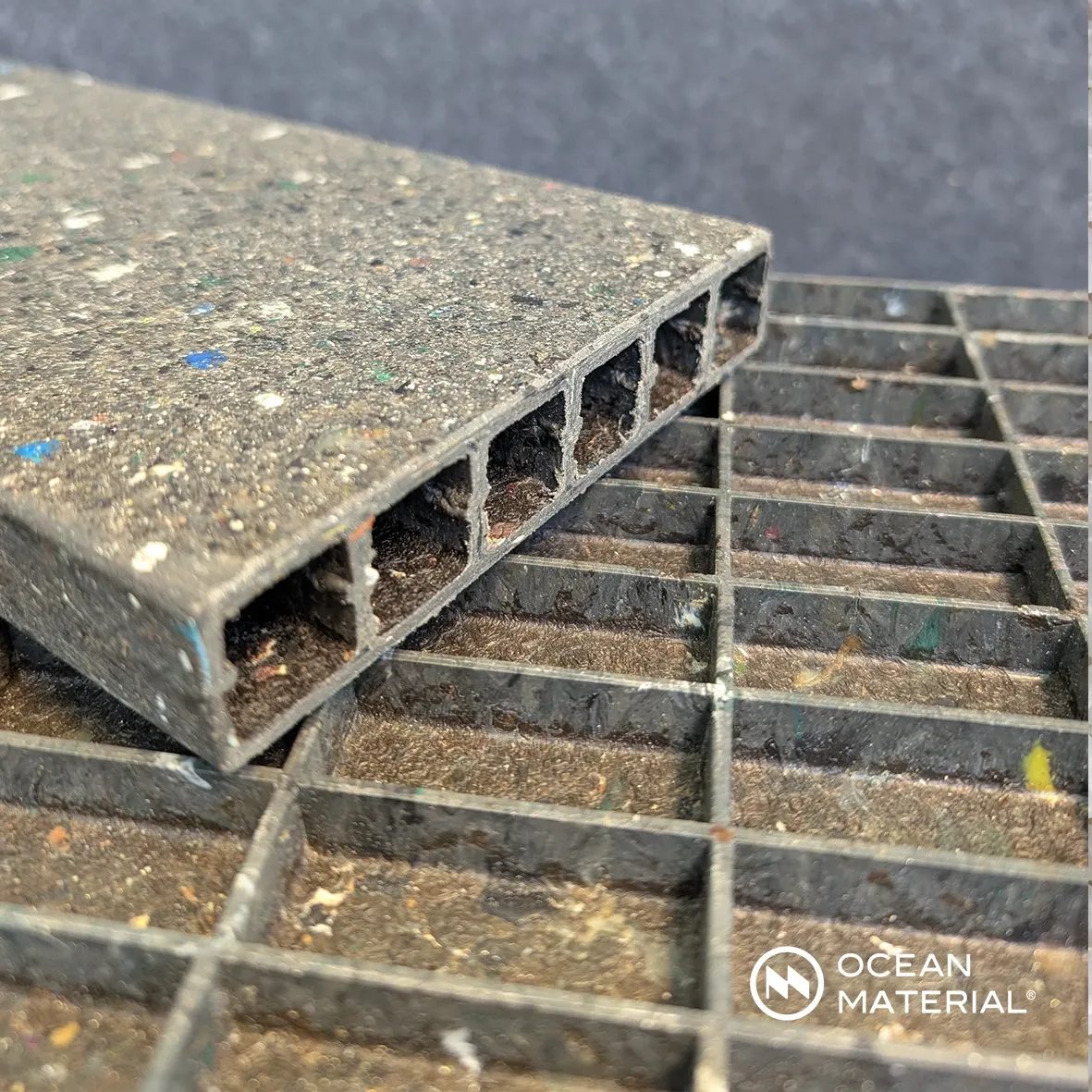
Prototype panels for selected development projects. Scope, quantities and lead times to be confirmed.
Sheet
Granules
Granules · Yarn-production grade
Finished fabric
Finished fabric
Finished fabric
Finished fabric
Finished fabric
Finished fabric
Finished fabric
Finished fabric
Finished fabric
Finished fabric
Finished fabric
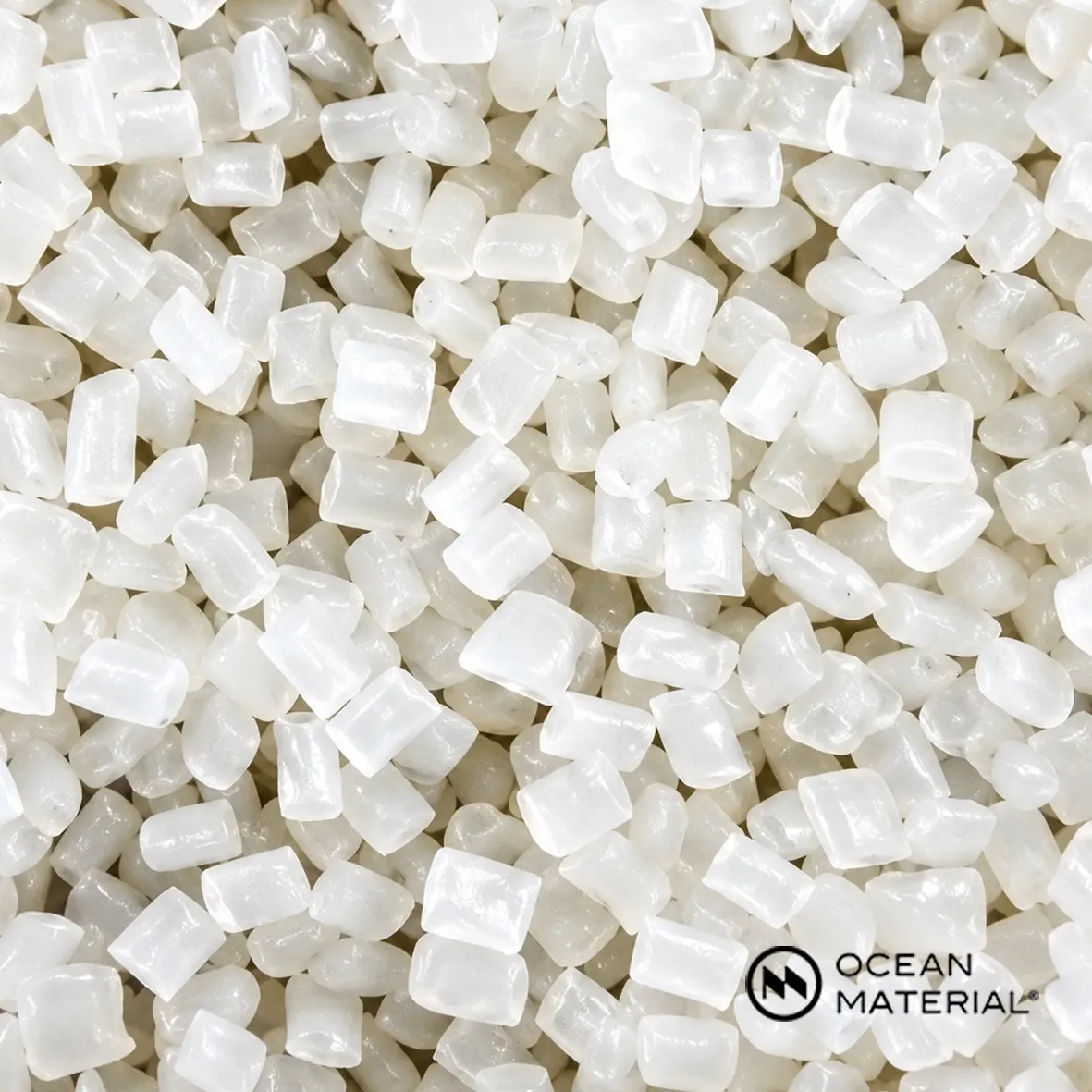
The recycled PA6 pellet range includes Natural and Green unreinforced grades, the GF30 compound and Bright or Full-Dull pellet grades for yarn production. Compare the PA6 pellet grades. Finished nylon yarn and nylon-containing fabrics are separate supply forms; mixed fabrics retain their stated composition.
For recycled nylon 6 used in injection moulding or extrusion, start with the required mechanical properties, colour, processing method and technical data sheet. Ocean Material coordinates grade selection and compound qualification with industrial partners against your specification. Our material application examples show how material choice connects with finished products.
Send your application, target specification, expected volume and delivery destination when assessing Ocean Material as your recycled PA6 supplier. We coordinate technical documents, sample enquiries and sourcing requirements for the selected grade. Review origin records and the applicable GRS or RecyClass scope during qualification. Fishing-net PA6 uses post-consumer feedstock; fabric composition and provenance are assessed separately.
Our range includes PA6 from end-of-life fishing nets: mechanically recycled grades for injection moulding and chemically recycled grades for textile applications.
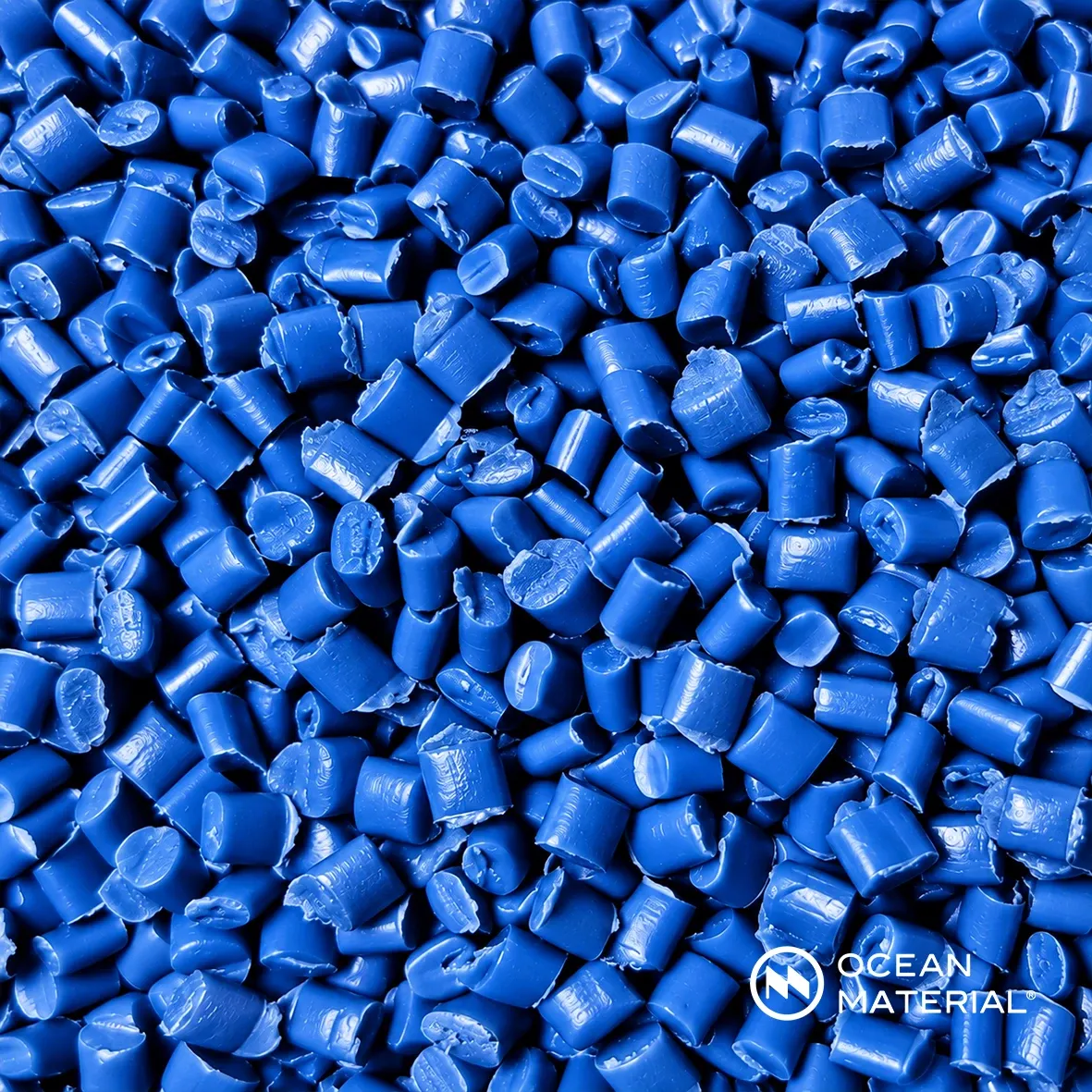
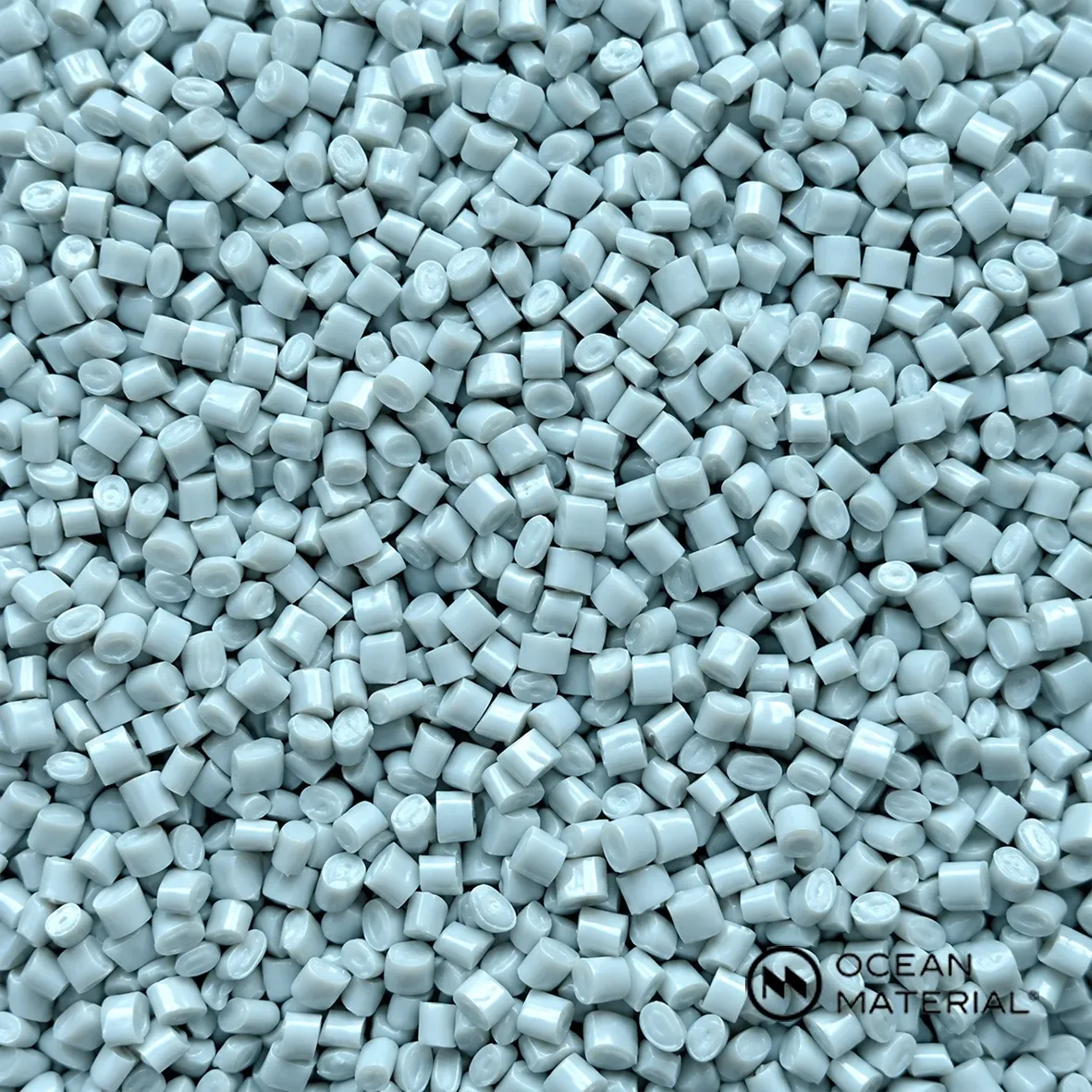
For injection moulding, we offer unreinforced pellets made of 100% PA6 in ‘natural’ (mint-coloured) and green, as well as glass-fibre-reinforced compounds such as GF30 with 70% PA6 and 30% glass fibre. Compounds with other materials and formulations are available on request.
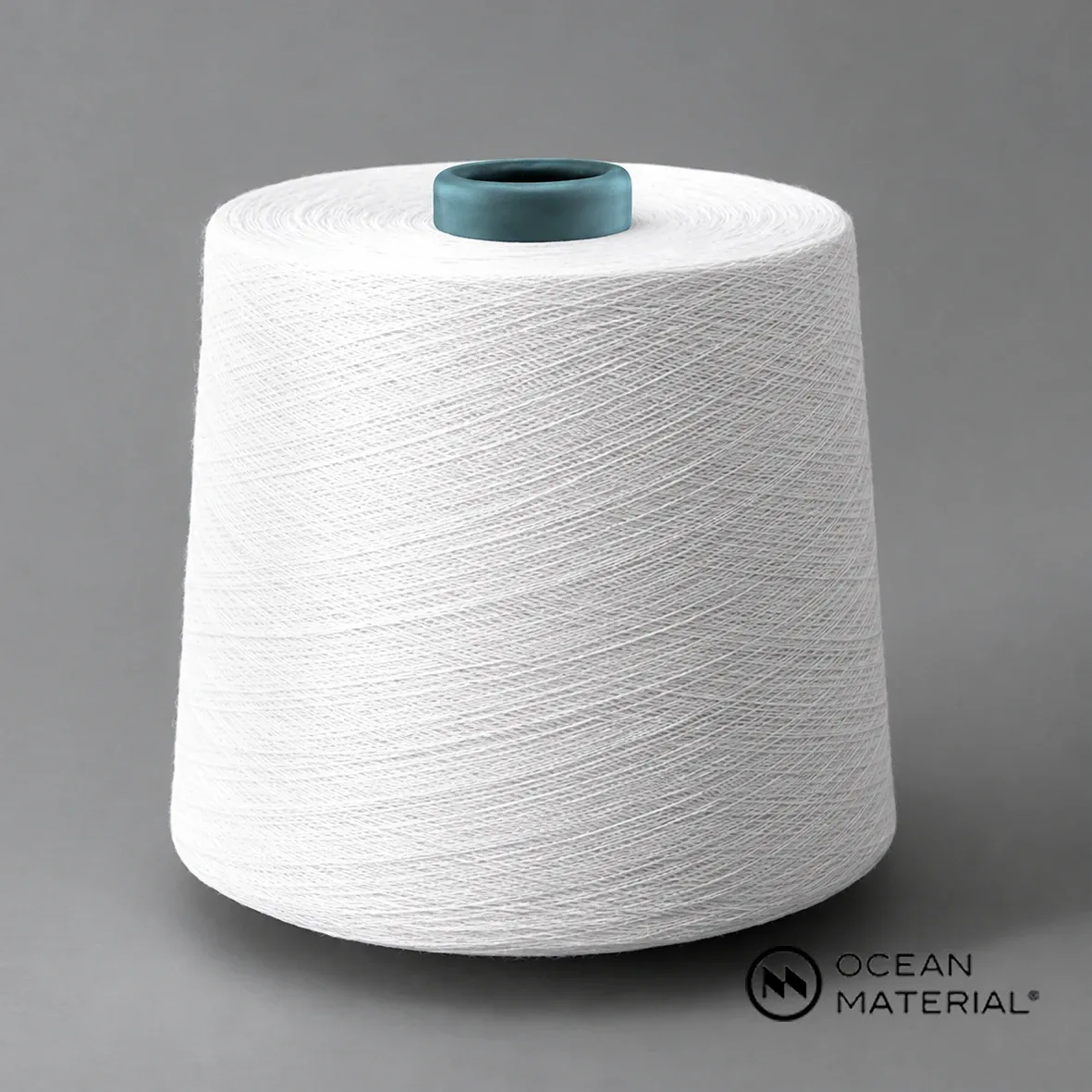
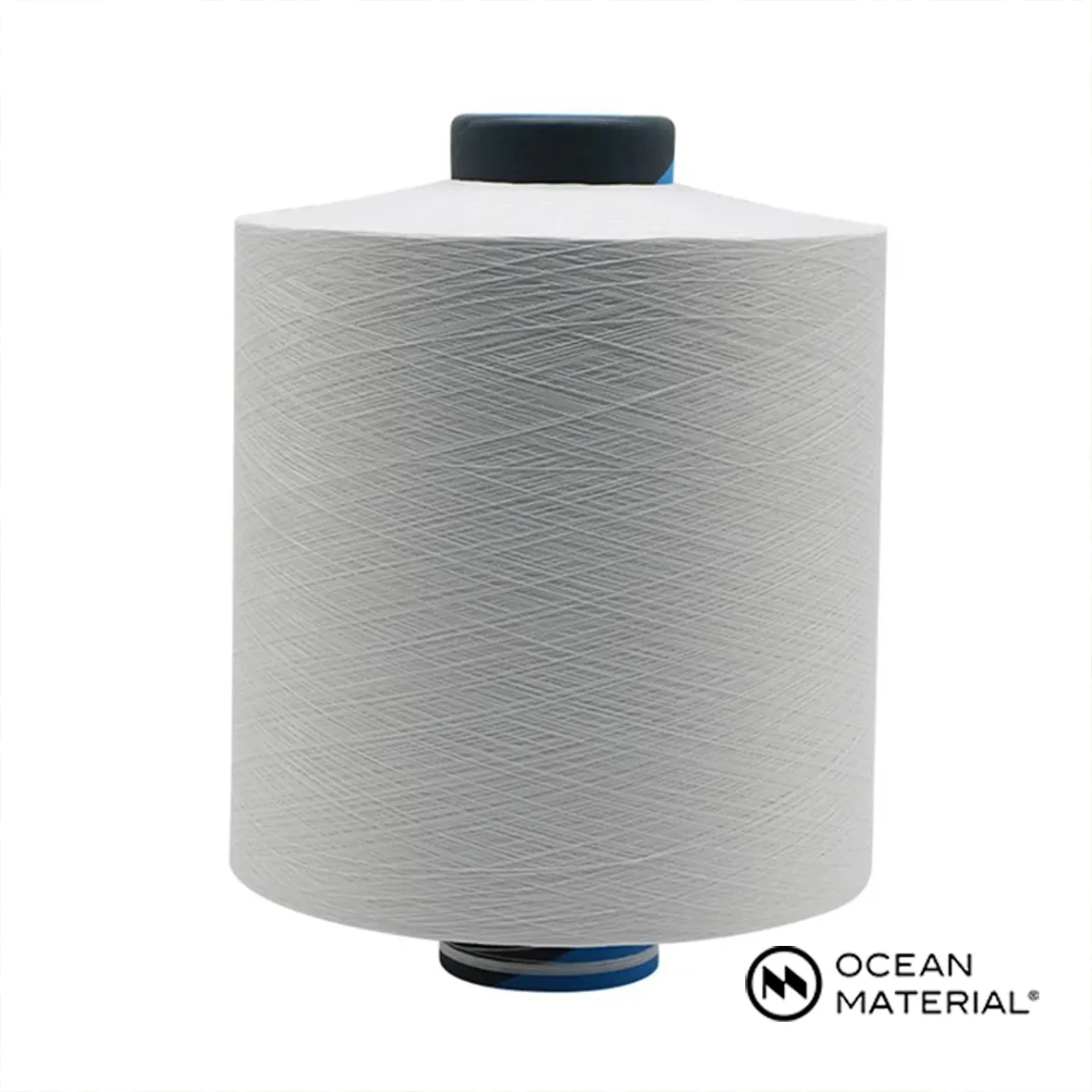
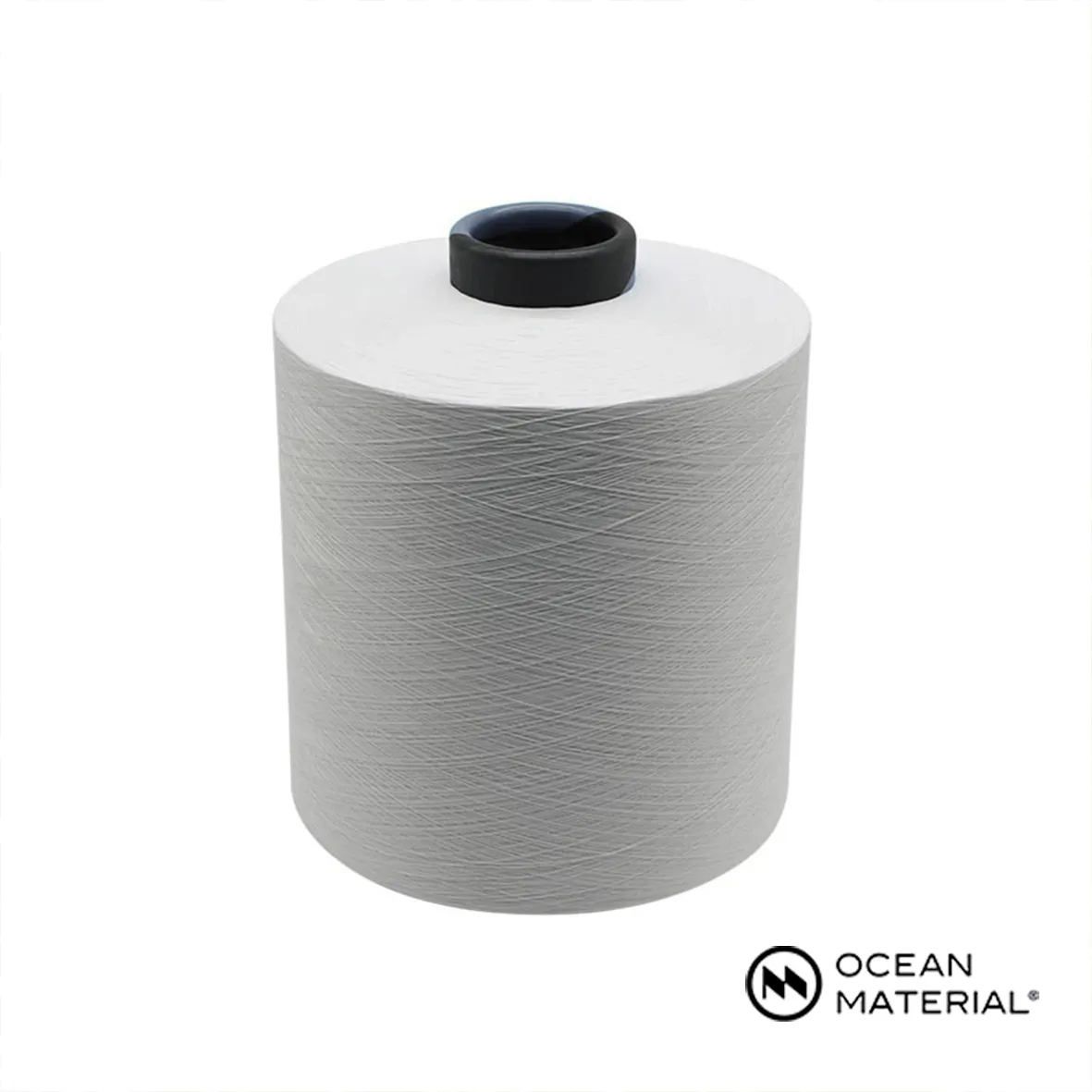
For textile applications, we offer PA6 pellets in Bright, Semi-Dull and Full-Dull grades, with the PA6 feedstock sourced entirely from end-of-life fishing nets. We also supply POY and DTY yarns in a wide range of specifications.
Compare our PA6 pellet grades against your requirements.
Yes. PA6 stands for polyamide 6, also known as nylon 6. Both names refer to the same polymer type. PA66, or nylon 66, is a different type. When enquiring, specify PA6 together with the supply form and specification you need, such as unreinforced pellets, a glass-fibre-reinforced compound or yarn.
For injection-moulded components, start by comparing the unreinforced ‘natural’ and green grades and the GF30 compound. For extrusion applications, we assess the suitable grade against your process and product requirements. For yarn production, we offer Bright, Semi-Dull and Full-Dull pellet grades.
Your processing method, component or yarn requirements, and the technical data sheet for the specific grade guide the selection. Ocean Material coordinates material selection and sampling with you and your industrial partners.
PA6 is hygroscopic: it absorbs moisture from the surrounding air. Before processing, dry the pellets according to the instructions for the selected grade. The recommended drying time and temperature are given in that grade’s technical data sheet (TDS).
Yes. The PA6 in our fishing-net pellets comes from nets collected from fishing communities at the end of their working life. This makes the PA6 post-consumer recycled material (PCR). In our GF30 compound, that origin applies to the 70% PA6 content. The remaining 30% is glass fibre. Typically, fishing operators hand in these retired nets on land.
Compare the values and test conditions in the grade’s technical data sheet with your component or yarn specification. If you need material certified to the Global Recycled Standard (GRS), tell us when you enquire. We can confirm how recycled content and origin are documented for the selected grade. For certified goods, the transaction certificate identifies the products covered by the shipment.
Tell us what you are making, how you plan to process the PA6 and which properties you need. Include the supply form, sample quantity, expected order volume and delivery destination. We will confirm the minimum order quantity, sample costs and lead time for the selected grade. Discuss your PA6 project
Discuss your application, specification and expected volume with Ocean Material.