

OCEAN MATERIAL | MAY 15TH 2025 | 12 MIN
Recycled materials are increasingly becoming part of mainstream products.
But the real challenge is often not the material itself — it’s identifying the right application.
Not every product is suitable for circular materials.
And not every recycling story creates meaningful long-term impact.
The key question for brands, manufacturers, and procurement teams is no longer simply:
“Can we use recycled content?”
The real question is:
“Where do recycled materials create lasting technical, commercial, and environmental value?”
At Ocean Material®, we focus on recycled materials applications where circularity works not only in theory, but in real-world industrial systems — through durability, functionality, scalability, and traceable supply chains.
From high-performance technical components to reusable beverage crates and premium consumer products, here are three examples of how recycled materials are already being integrated into applications designed for long-term use.
Real Circularity Starts with the Right Applications
In our view, the strongest recycled materials applications share several important characteristics:
- Long product lifetime
- Real functional value
- Repeated daily use
- Scalable volumes
- Materials that remain in circulation for years — not weeks
This is where circular materials can move beyond marketing claims and become part of genuine industrial value creation.
Because circularity is not simply about replacing virgin plastic.
It is about designing products and systems where recycled materials make practical sense over the long term.
Technical Components Built for Durability
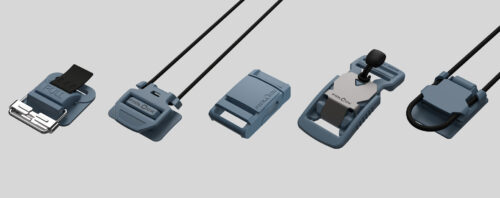
One strong example is the integration of Ocean Material® into selected technical buckles and components by Fidlock.
This application demonstrates how recycled fishing nets can become part of premium high-performance products used across outdoor equipment, mobility systems, sports products, and technical applications.
In these environments, materials must meet real performance expectations:
- durability
- repeated mechanical stress
- reliable functionality
- long product lifetimes
This is an important shift in the perception of recycled materials.
Circular materials are no longer limited to low-performance applications or purely symbolic sustainability projects.
They are increasingly becoming part of engineered products designed for everyday functionality and long-term use.
Applications like these also highlight an important aspect of modern circular economy systems:
The greatest value is often created when recycled materials become part of products people rely on for years.
Circular Systems Create Stronger Material Value
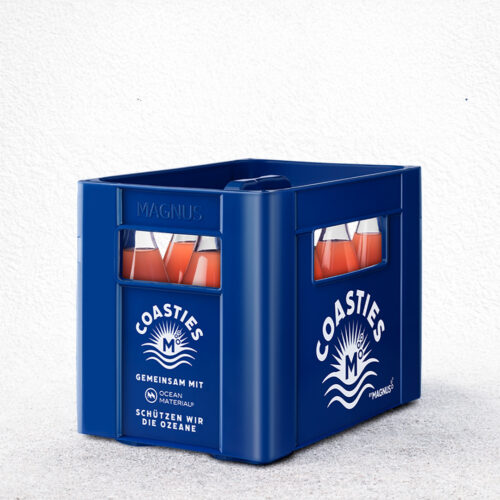
Perhaps one of the clearest examples of effective recycled materials applications can be seen in reusable beverage crate systems.
The Coasties beverage crate demonstrates how Ocean Material® can become part of highly durable logistics infrastructure designed around continuous circulation and reuse.
Why does this matter?
Because circularity works best in systems where products are:
- reused repeatedly
- returned efficiently
- exposed to high daily utilization
- and designed for long operational lifetimes
Unlike short-lived packaging applications, reusable transport systems can keep materials in active circulation for many years.
This creates several advantages:
- lower material consumption over time
- reduced waste generation
- stronger economic efficiency
- lower replacement frequency
- and measurable environmental impact
Applications like beverage crates show that the future of recycled materials is not simply about using waste — but about designing systems where materials retain value for as long as possible.

Recycled Materials Can Also Become Premium Design
Circular materials are increasingly entering another important category: premium consumer products.
Umbra recently introduced bathroom accessories made with Ocean Material®, demonstrating how recycled maritime materials can become part of modern product design without compromising aesthetics or functionality.
This is an important development for the broader recycled materials industry.
For many years, recycled products were often associated with rough surfaces, inconsistent quality, or purely “eco-focused” aesthetics.
That perception is changing rapidly.
Today, recycled materials can support:
- premium surface finishes
- modern industrial design
- durable consumer applications
- and high-quality user experiences
The goal is no longer simply to create sustainable alternatives.
The goal is to create products people genuinely want to own, use, and keep.
Because long-term product retention is itself an important part of circularity.
Why Procurement Teams Are Rethinking Material Selection
Across industries, procurement teams are facing increasing pressure to rethink material sourcing strategies.
This shift is being driven by several factors:
- evolving environmental regulations
- traceability requirements
- growing concerns around greenwashing
- customer expectations
- and the need for more resilient supply chains
As a result, material selection is becoming more strategic.
Companies are increasingly evaluating not only recycled content percentages, but also:
- application suitability
- long-term durability
- supply chain transparency
- compliance readiness
- and real-world product performance
In many cases, the success of recycled materials depends less on the material itself — and more on choosing the right application.
That is why the future of circular materials will likely be shaped not only by recycling technologies, but by smarter application and system design.
The Future of Recycled Materials Applications
Circular materials are not about replacing every product with recycled content.
The real opportunity lies in identifying the applications where recycled materials create the greatest long-term value — technically, commercially, and environmentally.
At Ocean Material®, we focus on building traceable supply chains for recycled materials applications where circular solutions work in practice.
From recycled fishing nets and ocean-bound plastics to durable industrial and consumer products, the objective remains the same:
Creating material systems designed for long-term use, measurable impact, and real functionality.
Because this is no longer simply a sourcing discussion.
It is a system and application design decision.
Interested in recycled materials for your application?
Ocean Material® supports brands and manufacturers with certified recycled material supply chains, technical guidance, and circular material solutions designed for real-world implementation.
Explore more:
- Discover our sustainable materials
- Learn about our upcycling technology
- 🇩🇪 Lesen Sie diesen Artikel auf Deutsch
- 🇨🇳 阅读中文版
15.05.2026
FAQ
Recycled materials applications refer to products and systems where recycled materials are used in practical, functional, and commercially viable ways. Strong applications are typically durable, scalable, and designed for long-term use.
Many recycled material applications fail because the product was not designed for the material. Successful circular products require the right balance of durability, functionality, supply chain stability, and realistic performance expectations.
Ocean Material® works with recycled fishing nets, ocean-bound plastic, deep-sea cable polymers, and other traceable recycled maritime materials for industrial and consumer product applications.
Ocean Material® materials are used across outdoor products, mobility, logistics, consumer goods, packaging, technical components, and premium design applications.
Durable products keep materials in circulation for longer periods of time. This reduces waste generation, improves resource efficiency, and increases the long-term value of recycled materials.
Ocean-bound plastic refers to plastic waste collected near coastlines and waterways before it can enter the ocean. It is an important feedstock for traceable recycled material supply chains.
Yes. Modern recycled materials can support premium design, high durability, and strong technical performance when used in the right applications and product systems.
 English
 Deutsch
 中文
中文